CNC automation payback: lower cost per part, faster return
What does a robot on your CNC machine cost, and when does it pay back? The answer comes from the extra spindle hours and the lower cost per part.
How does CNC automation pay back?
A robot cell pays back through extra spindle hours on machines you already own. Your machine, building and software cost the same whether the machine runs 40 or 80 hours a week, so every unattended hour lowers the cost per part.
At the same time, operators spend less time on loading and more on work that adds value. The payback time depends on your cycle times, batch sizes, wages and the number of hours the robot adds.
- More spindle hours: evenings, nights and weekends on the same machine.
- Less labour per part: the robot loads; the operator supervises several machines.
- Machine investments avoided: more output without buying an extra machine.
- New orders: capacity and price competitiveness to win work you used to lose or refuse.
How to calculate your payback
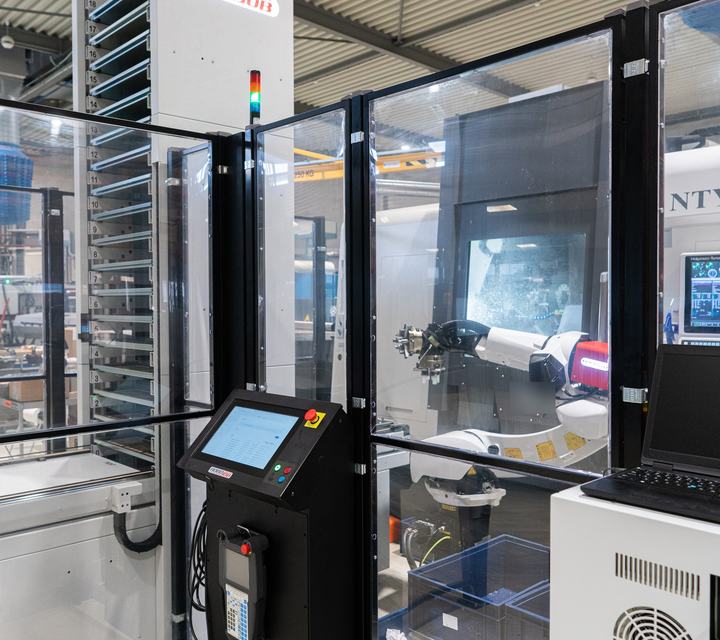
Start with the hours per week your machine is not cutting today: breaks, changeovers, evenings, nights and weekends.
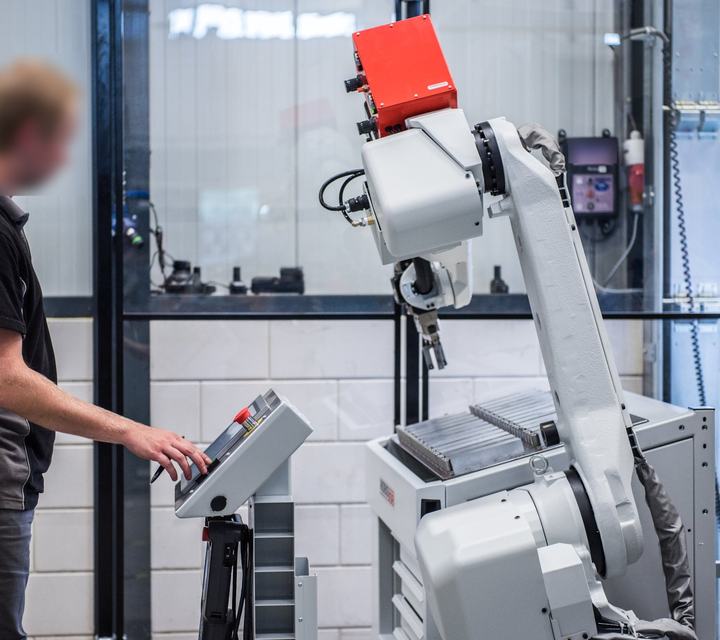
Select the parts that come back regularly or run in series. Those are the jobs a robot can take over first.
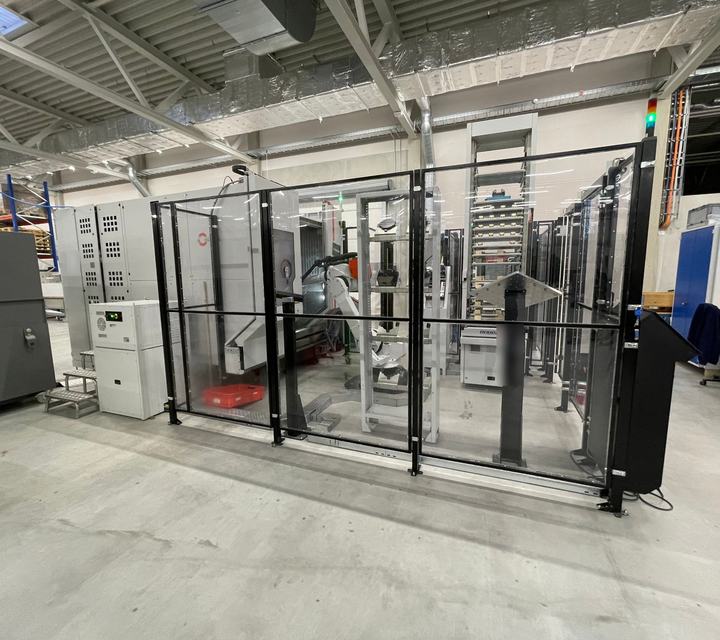
Based on cycle times and storage, estimate how many extra hours the robot can run per week.
Divide your machine and labour costs over the higher output. More parts on the same machine means a lower cost per part.
Include the second machine or the extra shift you no longer need to staff or buy.
Enter your own figures in the ROI calculation, and our team will check them with you.
What determines the payback time?
The payback time of a RoboJob cell is different for every shop. These are the factors that make the difference.
The more unattended hours you add, the faster the payback. Running nights and weekends weighs more than covering breaks.
Fast job set-up keeps small series profitable, so more of your work counts towards the payback.
Higher machine and labour costs per hour make every automated hour worth more.
Which RoboJob system gives the fastest return?
The fastest return comes from the system that fits your parts and hours, not from the biggest one.
- Coby CNC: the lowest entry point, for small parts and small batches.
- Turn-Assist and Mill-Assist: compact cells for one machine, installed in 4 to 5 days.
- Pallet-Load: a simple concept for heavier parts and larger series.
- Tower and Wall: the most unattended hours and the most flexibility, for one or several machines.
Many customers start with one cell and add more once the first one has proved itself. Strautmann Hydraulik started with one machine in 2016 and now runs five.
Compare the systems
-

Coby CNC
The compact, safety-first co-worker that makes your first step into CNC automation feel like a walk in the park.
-

Turn-Assist
A smart, flexible system that streamlines the loading and unloading of CNC lathes.
-

Mill-Assist
A compact, versatile solution that automates CNC milling machine loading with speed and precision.
-

Pallet-Load
A reliable automation solution designed to efficiently load and unload CNC machines from and to a pallet.
-

Tower
The ultimate automation for turning and milling machines - swapping fixtures, jaws, collets, and workpieces faster than you can say ‘automation genius’.
-

Wall
A revolutionary modular automation system that simplifies CNC machine loading with maximum space efficiency.
Calculate your own payback
Enter your machines, wages and shifts in the RoboJob ROI calculation and see your payback time.
Costs to include
The robot cell, modules and installation: 4 to 5 days for compact cells, at least 2 weeks for a Tower or Wall.
A robot interface, automatic door and automatic clamping, if your machine does not have them yet.
Grippers, fingers and grid plates or trays for your parts. Configurable tables keep this cost low for varying parts.
Results our customers report
Meca Technic grew its turnover by up to 50% between 2020 and 2025 after automating two machining centres. SMB Feldner was in the black from the first month. EFM gets 50% more spindle hours on its automated machines.
What changes in your numbers
Automation shows up in your figures in several places at once.
Higher utilisation. Strautmann Hydraulik went from 68% to 85% capacity utilisation in its automated area.
More hours per day. NEXTec+ went from 16 to 20 production hours a day.
Competitive prices. NEXTec+ even won back orders from China.
Growth without new machines. Meca Technic grew its turnover by up to 50% from 2020 to 2025.
Lower production costs. At Meca Technic, the robot keeps the machine working at night and at weekends, which lowers the cost of production.
Payback in practice
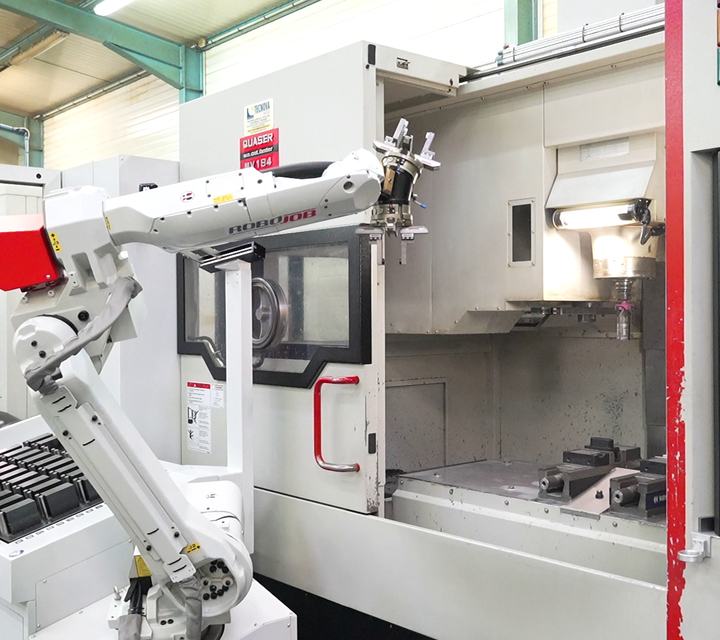
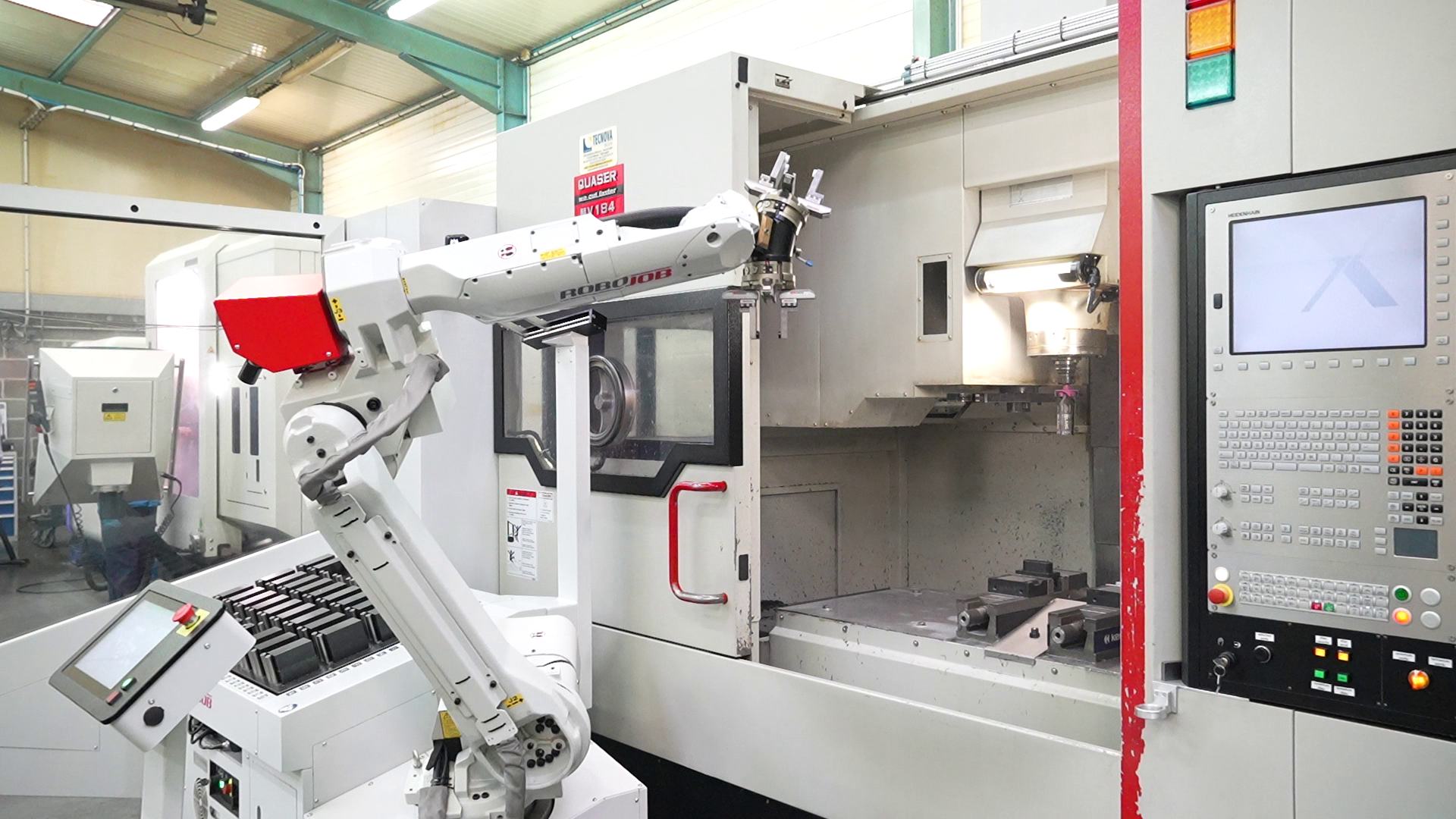
Subcontractor Meca Technic automated a Quaser MV184 and a Hedelius Acura 50 EL with Mill-Assist Essential cells. The machines work at night and at weekends, which lowers production costs; turnover grew by up to 50% from 2020 to 2025.
With three Turn-Assist cells on Mazak lathes, NEXTec+ produces 20 instead of 16 hours a day, a quarter of its orders unmanned, and became competitive enough to win back orders from China.
Strautmann started with one automated machine in 2016 and now runs five. Capacity utilisation in the automated area rose from 68% to 85%.
More customer stories
Discover what automation delivered for other machine shops.
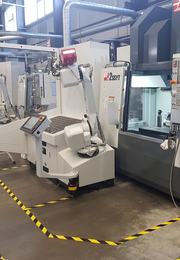
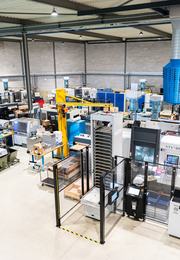
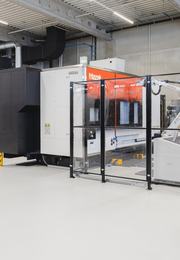
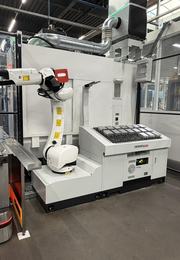
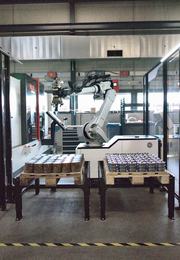
More customer stories
Discover what automation delivered for other machine shops.
CNC automation payback: frequently asked questions
How long does it take for CNC automation to pay back?
That depends on how many extra hours the robot adds, your hourly rates and your batch sizes. Use the RoboJob ROI calculation with your own figures; SMB Feldner, for example, was in the black from the first month.
How does automation lower the cost per part?
Fixed costs such as the machine, building and software are spread over more parts when the machine runs more hours. Labour per part also drops, because the robot does the loading.
Is a robot cheaper than an extra machine?
Often, if your current machines are idle for many hours a week. A robot adds output to the machines you already have, without the floor space and operator an extra machine needs.
What costs should I include?
The robot cell and modules, installation, machine preparation such as a robot interface and automatic door, and grippers and part storage.
Can I start small?
Yes. Many customers start with one cell, such as a Turn-Assist, Mill-Assist or Coby CNC, and add more once it has proved itself.
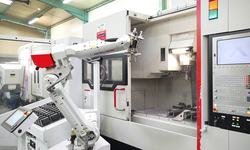
Want to know your payback time?
Send us your machines, parts and shifts. We will calculate the payback with you and send you an offer.
Let's meet
Want to calculate the payback for your machines?
Get in touch and explore the opportunities for your business.


Jan Van De Wouwer
Sales Manager

Austin Davis
Area Sales Manager
