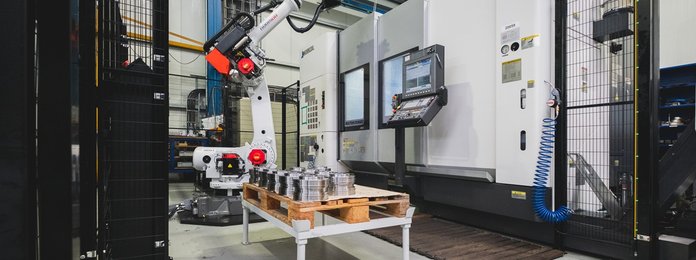
Short on CNC capacity?
Keep your machines running after your team goes home
Friday, 4 PM, and a rush order comes in
A regular customer calls: can that batch of parts be ready by Tuesday? The schedule is already full, your best operator has the weekend off, and the machine you need will sit idle until Monday morning. Then comes the thought every machine shop owner knows: “We’re simply an operator and one machine short.”
We know that moment well. RoboJob grew out of the machining world, and Fridays like that were the reason we started automating CNC machines back in 2007. What we’ve learned from more than 2,000 installations: often you’re not short of a machine. Your machines are standing still at the moments your people aren’t there.
In this article, you’ll see where those idle moments are, how to put them to work step by step, and why that often pays off faster than a new machine.
An extra machine doesn’t solve the real bottleneck
A new lathe or milling machine seems like the logical reflex. But take a look at what actually changes on the shop floor.
- Who sets it up and keeps an eye on it? An extra machine needs an extra operator, and that’s exactly who is hardest to find today.
- A machine never comes alone. Workholding, tooling, foundations, programming and training all add to the bill.
- Every square meter counts. Most shops simply have no room left for another machine.
The result: two machines that both stop as soon as the shift leaves. Your machine park grows, but the hours actually spent cutting metal don’t.
The quiet hours in your shop
Take a walk through your shop during the lunch break, at a shift change or on a Saturday morning. How many machines are running? In the companies we visit, machines go quiet at three kinds of moments.
- During the day: breaks and shift changes, or when the operator is busy at another machine and the finished part is waiting to be swapped.
- In the evening and at night: after the last shift, the machine is switched off, even when there’s work waiting.
- At the weekend: two full days in which the machine earns nothing, while depreciation keeps running.
You don’t have to put all those quiet hours to work at once. Think of it as a ladder you climb one rung at a time, with every rung paying back the automation faster:
- Two extra spindle hours a day by covering breaks and shift changes: paid back in about 18 months.
- Adding evening and night production: paid back in about 12 months.
- Running through the weekend too: paid back in about 6 months.
Guideline figures from our ROI calculation. Your own payback time depends on your parts, cycle times and hourly rate.
You start on the rung that fits your parts and your organization today. Most customers start small, for example by covering breaks and shift changes, and only then move on to unattended nights and weekends.
CNC Automation that fits your shop
Automation isn’t an all-or-nothing decision. Not every shop needs a fully autonomous cell right away, and not every part is suited to running unattended 24/7. That’s why RoboJob built the broadest portfolio of standard solutions for automating lathes and milling machines. You choose the step that fits your parts, your batch sizes and your ambitions.
Coby CNC: a low-threshold first step
For shops taking their first step into automation. Coby CNC is a compact, safe co-worker that loads and unloads parts.
Turn-Assist: for turning
Turn-Assist automatically loads and unloads your lathe, so it keeps running during breaks and after the shift.
Mill-Assist: for milling
Mill-Assist provides compact, fast loading of your milling machine.
Pallet-Load: for shops working with europallets
Pallet-Load automatically loads and unloads CNC machines from and to a pallet.
Tower: for unattended nights and weekends
The Tower swaps not only workpieces, but also fixtures, jaws and collets.
Wall: maximum automation on minimal floor space
The Wall is a modular system built for maximum space efficiency.
What all these solutions have in common: they are standard solutions, developed by people who know the shop floor. They are designed to be run by your own operators, without hiring a robot programmer. And they are brand-independent: we have automated more than 100 CNC brands, on new and existing machines alike.
What our customers say
Theory is one thing; the shop floor is another. That’s why we prefer to let our customers speak. Here are two examples of companies that got more capacity out of machines they already had.
Strautmann Hydraulik: from 68% to 85% utilization.

This German manufacturer of hydraulic cylinders runs around ten CNC machines, five of which are equipped with a RoboJob. In the automated area, utilization in a two-shift system rose from 68% to 85%, and the machines now run unattended into the early hours. Within two weeks of commissioning, production had already risen noticeably.
Heemskerk Fijnmechanica: 24/7 with three Towers.
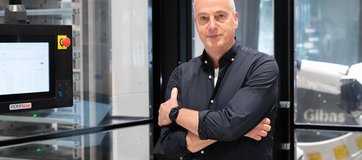
Managing director Lucien Heemskerk first thought the Tower would be too expensive, until he saw a demo unit running next to his lathe. Today, three Towers keep production going day and night. His conclusion: “Today, we truly get the most out of our spindles.”
What these stories have in common: nobody bought an extra machine first. They started with the machines already on the floor and expanded step by step. More than 2,000 installations later, you’ll find dozens of similar stories, filterable by product series, CNC brand and industry, on our customer testimonials page.
The questions we really hear on the shop floor
Anyone considering automation has legitimate questions. We hear them on almost every company visit, and we take them seriously.
“No two orders are the same here. Won’t a robot slow us down?” No. Your operator sets up a new batch in the RoboJob software in a matter of minutes. That means you can still fit in a rush order without the automation getting in the way.
“Our machines aren’t exactly new. Will that work?” That’s the rule rather than the exception. Our robots are brand-independent and already work with more than 100 CNC brands. Vanderscheuren, for example, automated lathes that had been in the shop for years. We’ll look at which of your machines are the best candidates together.
“Who’s going to program it? We don’t have a robot specialist.” You don’t need one. Our software is made for CNC operators, not robot programmers. Anyone who can run a machine quickly learns to run a RoboJob solution. At Vanderscheuren, every operator works with it easily and gladly.
“What will my operators think?” Above all, their work becomes lighter and more interesting. The robot takes over the heavy, repetitive loading and unloading, freeing their hands for programming, setting up and measuring. On top of that, a modern, automated shop is far more appealing to young people. Because without skilled people, there is no industry.
“Isn’t it far too expensive?” Look at the payback time, not just the price. If the machine also runs at night and at the weekend, a robot often pays for itself within the warranty period. Lucien Heemskerk also thought a Tower would be too expensive, until he saw the return. We’re happy to work it out with you, based on your own figures.
Four steps to more capacity from your existing machines
- Measure your current spindle time. For a few weeks, record how many hours each machine actually spends cutting. Also note when it stands still: during breaks, after the last shift or at the weekend.
- Pick the right candidate machines. Start with the machine that is most often a bottleneck, or the one that runs recurring parts.
- Look at your product mix. Which parts are suited to automatic loading? What batch sizes and cycle times do you have? That determines whether you start with a Coby CNC, a Turn-Assist or Mill-Assist, a Pallet-Load, or go straight for a Tower or Wall.
- Do the math. Set the extra hours from automation against the cost and lead time of a new machine. The choice is often quickly made.
Our specialists are glad to help you with each of these steps, with an analysis based on your machines and your parts.
Frequently asked questions about capacity and CNC Automation
How can I increase the capacity of my CNC machines without buying a new machine?
By increasing the effective spindle time of your existing machines. With automatic loading, lathes and milling machines keep running during breaks, after the shift, at night and at the weekend, without extra operators.
How quickly does CNC Automation pay for itself?
That depends on how many extra hours the machine runs. As a guideline: about 18 months with two extra hours a day, about 12 months with evening and night production, and about 6 months when weekend production is added.
Can a robot switch quickly between different orders?
Yes. With RoboJob, the operator sets up a new batch in the software in a matter of minutes, without any robot programming. That makes automation feasible even when your orders vary widely or rush orders are common.
Which CNC machines can be automated?
Both lathes and milling machines, whether new or years old. RoboJob solutions are brand-independent and have been installed on more than 100 CNC brands.
What is the difference between Coby CNC, Turn-Assist, Mill-Assist, Pallet-Load, Tower and Wall?
Coby CNC is the low-threshold first step. Turn-Assist and Mill-Assist automate lathes and milling machines respectively. Pallet-Load loads machines from and to a pallet. Tower and Wall are built for long periods of unattended production, also swapping fixtures, jaws and collets.
Do I need a robot programmer to get started with automation?
No. RoboJob solutions are operated through easy software designed for CNC operators.
Conclusion: keep your machines running after your team goes home
A capacity shortage feels like a machine problem, but it often sits in the hours when nobody is at the machine. By putting those quiet hours to work step by step, you get more output from the machines you already have, and your skilled people stay focused on the work where they truly make a difference.
At RoboJob, we understand that trade-off because we come from the machining world ourselves. We know what it feels like when the schedule overflows, and we know the questions you have before taking the step.
Curious how many quiet hours are hiding in your shop? Request a free ROI calculation or book a demo and see our solutions at work.