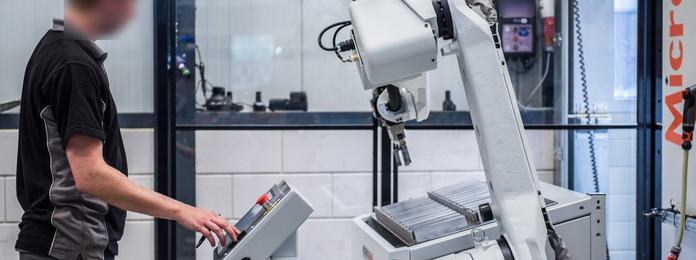
Thinking about CNC Automation?
From first conversation to working installation: what can you expect from RoboJob?
Tuesday evening, and the brochure is still on the desk.
You've seen the robot at a trade fair, watched the videos and maybe even done a quick calculation. The idea makes sense. And yet the brochure has been on your desk for weeks. Because between "interesting" and "let's do it" sits one big question: "What am I actually getting into?"
We hear that question all the time, and we understand it. RoboJob grew out of the machining world, and we started automating CNC machines back in 2007. More than 2,000 installations later, we know: the technology is rarely what holds people back. It's not knowing what the road there looks like.
In this article, we walk you through that road step by step: from the first conversation to the moment your machine runs on its own, and what happens after that.
Why does the first step feel so big?
Automating a CNC machine isn't something you do every year. So it's logical that the step raises questions.
- Will it work on my machine? Your machines may not be new, and your workpieces may vary from order to order.
- What will it disrupt? Production can't stop for weeks just because a robot is being installed.
- Can my people handle it? You don't have a robot programmer, and you don't want to hire one.
- What if something goes wrong afterwards? A supplier who disappears after delivery is the last thing you need.
All fair questions. The good news: with a clear process, you know the answer to each of them before you sign anything.
What does the road from first conversation to working installation look like?
Every project is different, but the road is always the same. Think of it as a series of steps, where each step answers a question before you move on to the next:
- First conversation: at a trade fair, during a company visit or by phone. We listen to where it pinches: capacity, staff, rush orders, heavy work. No sales pitch, just questions.
- Analysis of your machines and workpieces: which machine is the best candidate? Which workpieces, batch sizes and cycle times do you have? That determines which solution fits.
- ROI calculation: we set the extra spindle hours against the investment, based on your own figures. That way you see in black and white whether and when automation pays off.
- See it working: in one of our showrooms, at an open house or at a customer, you see the solution at work. Ideally with workpieces that resemble yours.
- A clear offer: a standard solution, completed with the modules, grippers and gripper fingers your workpieces require. No surprises afterwards.
- Preparation: together we check what's needed on site, such as floor space, power and the connection to your CNC machine. A machine that is fully operational is the starting point.
- Installation and commissioning: our specialist installs the cell on your machine and gets it running with your own workpieces.
- Training on site: your operators learn to set up and run the cell themselves, at their own machine.
- Production and support: after commissioning, you're not on your own. Our service team is just a phone call away.
The exact course depends on your solution. Coby CNC, for example, is designed as a do-it-yourself system with an online help centre, so you can get started even faster.
Most customers start with one machine, gain experience, and then add a second or third cell.
What do we ask of you?
A smooth project is teamwork. On our side, we bring the experience of more than 2,000 installations. On your side, a few things make a big difference:
- One point of contact: someone in your company who knows the machines and can make decisions.
- Representative workpieces: the workpieces you want to automate, so we can choose and test the right gripper fingers.
- A machine in good condition: the robot can only be as reliable as the machine it loads.
- Operators who are involved: the people who will run the cell, present during training. Their enthusiasm determines the success.
CNC automation that fits your shop
Automation isn't an all-or-nothing decision. That's why RoboJob built the broadest portfolio of standard solutions for automating lathes and milling machines. In the analysis phase, we look together at which step fits your workpieces, your batch sizes and your ambitions.
Coby CNC: a low-threshold first step
Coby CNC is a compact, safe co-worker that loads and unloads workpieces. Designed so you can get started with it largely yourself.
Turn-Assist: for turning
Turn-Assist automatically loads and unloads your lathe, so it keeps running during breaks and after the shift.
Mill-Assist: for milling
Mill-Assist provides compact, fast loading of your milling machine.
Pallet-Load: for shops working with europallets
Pallet-Load automatically loads and unloads CNC machines from and to a pallet.
Tower: for unattended nights and weekends
The Tower swaps not only workpieces, but also fixtures, jaws and collets.
Wall: maximum automation on minimal floor space
The Wall is a modular system built for maximum space efficiency.
What all these solutions have in common: they are standard solutions, which is exactly why the road to a working installation is predictable. They are designed to be run by your own operators, and they are brand-independent: we have automated more than 100 CNC brands, on new and existing machines alike.
What our customers say
How does that road feel from the other side? Two customers who took the step, and what it brought them.
Hetschel: installed in three days, running unmanned on day four
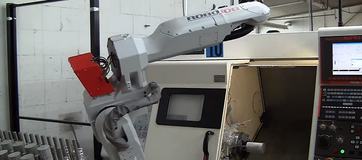
This German kart builder and supplier of small series and prototypes has around 12 employees. In 2016, a RoboJob Turn-Assist 250 was installed on its Mazak Integrex J-200S in just three days. On day four, the cell was already running unmanned, giving Hetschel more output with the same team.
Friedrich Daniels: automating an existing machine
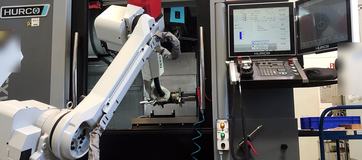
This German maker of surgical instruments, with around 50 people, produces very small series and single pieces. In 2019, its existing Hurco VMX30i machining centre was first retrofitted with an automatic door and a robot interface, then automated with a RoboJob Mill-Assist Essential. The result: less stress on the shop floor, and more time for set-up and process improvement.
What these stories have in common: good preparation made for a smooth, predictable start, on new and existing machines alike. You'll find dozens of similar stories, filterable by product series, CNC brand and industry, on our customer testimonials page.
The questions we really hear on the shop floor
Anyone considering automation has legitimate questions. We hear them on almost every company visit, and we take them seriously.
"Will production have to stop for long during installation?" The preparation happens upfront, so the time your machine is out of production stays limited. We plan the installation together with you, around your schedule.
"Our machines aren't exactly new. Will that work?" That's the rule rather than the exception. Our solutions are brand-independent and already work with more than 100 CNC brands. In the analysis phase, we look at which of your machines are the best candidates.
"Who's going to program it? We don't have a robot specialist." You don't need one. Our software is made for CNC operators. During training on site, your operators learn to set up a new batch themselves.
"What if something goes wrong after the installation?" Then we're there. Our service team supports you by phone, and our specialists come on site when needed. RoboJob develops and assembles its solutions itself, and keeps spare parts available.
"How do I know it will pay off?" That's exactly why the ROI calculation comes before the offer. As a guideline: about 18 months with two extra spindle hours a day, about 12 months with evening and night production, and about 6 months when weekends are added.
Four steps to prepare for your first conversation
- Measure your current spindle time. For a few weeks, record how many hours each machine actually spends cutting, and when it stands still.
- Pick a candidate machine. The machine that is most often a bottleneck, or the one that runs recurring workpieces.
- Gather a few workpieces and figures. Typical workpieces, batch sizes and cycle times make the first conversation much more concrete.
- Involve your operators. Ask them where they lose time. Their input is valuable, and it builds support from day one.
With that preparation, the first conversation immediately becomes a real analysis of your situation.
Conclusion: no leap in the dark, but a road with clear steps
Automating your first CNC machine feels like a big step, but it doesn't have to be a leap in the dark. With a clear road, from analysis and ROI calculation to installation, training and support, you know at every step what comes next, and why.
At RoboJob, we have walked that road more than 2,000 times. We come from the machining world ourselves, so we know the questions you have before taking the step.
Ready for that first conversation? Request a free ROI calculation, use our Help me choose tool or book a demo.
Frequently asked questions about getting started with CNC automation
What does the process look like when I work with RoboJob?
It starts with a conversation and an analysis of your machines and workpieces, followed by an ROI calculation, a demo and a clear offer. After preparation, our specialist installs and commissions the cell, trains your operators on site and our service team stays available afterwards.
Do I need to prepare anything before the installation?
Yes, a few practical things, such as floor space, power and a fully operational machine. We go through them together during the preparation phase.
Who trains my operators?
Our specialists train your operators on site, at their own machine, so they can set up and run the cell themselves.
What support do I get after the installation?
Our service team supports you by phone, and our specialists come on site when needed. Spare parts are kept available, including at our Technology Center in Germany.
Can I see a RoboJob solution at work before I decide?
Yes. You can see our solutions in our showrooms, at our open house and at trade fairs, and we can put you in touch with existing customers.
How quickly does CNC automation pay for itself?
That depends on how many extra hours the machine runs. As a guideline: about 18 months with two extra hours a day, about 12 months with evening and night production, and about 6 months when weekend production is added.