Awea CNC Automation with RoboJob robots

RoboJob automates every type of Awea CNC machine with robots that load and unload your workpieces: vertical machining centres from this Taiwanese machine builder, such as the Awea FCV-620 and AF-1060. That works on the Awea you already run and on the new one you are about to buy.
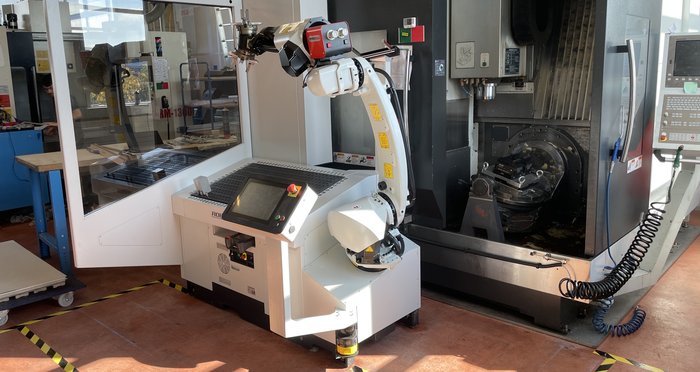
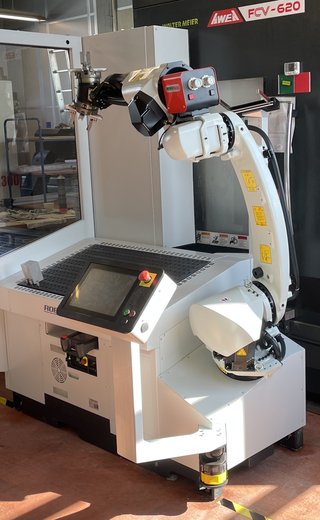
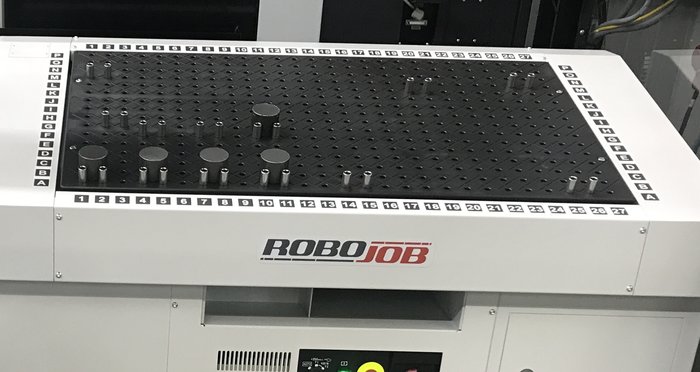
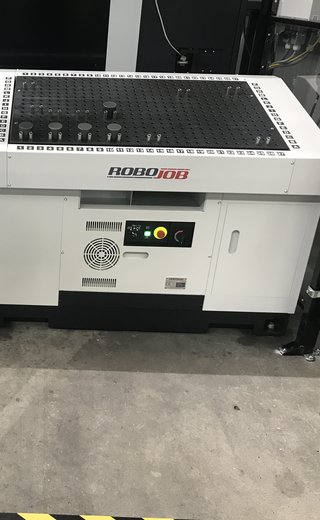
Photos: RoboJob automation on Awea machines
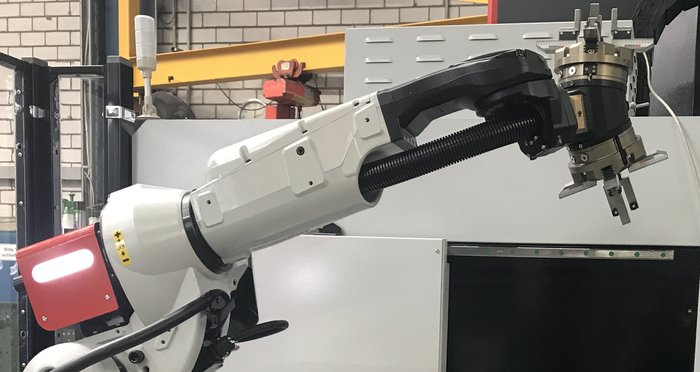
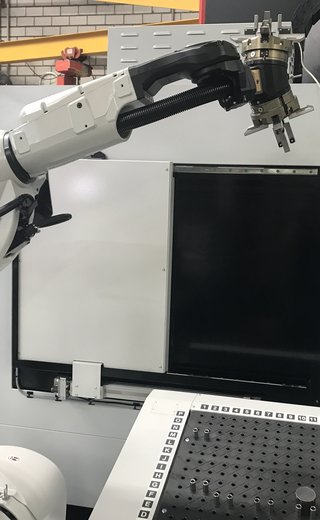
How RoboJob automates your Awea CNC machine
A RoboJob robot takes over the repetitive work at your Awea. It picks a raw workpiece, loads it into the vice or chuck, lets the Awea machine it and unloads the finished part. Your Awea keeps running during breaks, after the shift and at night, while your operators set up the next job, program and check quality.
You set up a new batch yourself in the RoboJob software, in a few minutes and without robot programming. With one click you change the robot speed, the gripping force of the grippers or let the robot grip eccentrically.
RoboJob automates every type of Awea CNC machine: FCV, AF and other vertical machining centres, bridge-type machining centres and 5-axis machines, new or existing. Some of the Awea models we have already automated:
- Awea FCV vertical machining centres, such as the FCV-620
- Awea AF vertical machining centres, such as the AF-1060
Is your model not listed? That does not matter: these are examples, not a limit. Our engineers check whether your Awea has an automatic door, automatic workholding and a robot interface, and tell you what is needed if it does not.
Which robot fits your Awea machining centre?
- Mill-Assist: compact loading and unloading for Awea machining centres, payload up to 70 kg, as on a Awea FCV-620
- Pallet-Load: automation from pallets, payload up to 165 kg
- Tower: high-mix, low-volume production around the clock; swaps workpieces and fixtures, payload up to 165 kg
- Wall: space-efficient automation that serves several machining centres from one system, payload up to 165 kg
- Coby CNC: collaborative robot for a first step into automation, payload up to 10 kg
Not sure which one fits best? Compare all products side by side or take the quick test below.
Get more spindle hours out of your Awea
With a RoboJob, your Awea keeps producing during breaks, evenings and nights.
Typical payback is 6 to 18 months. Get the brochure, see a RoboJob at work in a demo or request an offer.
Find the right robot for your Awea machine
Answer four quick questions about your Awea, your workpieces and your batch sizes, and we suggest the RoboJob that suits you best.
Why choose RoboJob for your Awea
RoboJob develops and builds standard automation for loading and unloading CNC lathes and milling machines. Since 2007 we have installed more than 2,000 robots in over 30 countries, on more than 100 CNC brands. Because every system is a standard product, you know in advance what you get, and installation is fast.
Headquarters and production are in Heist-op-den-Berg, Belgium, with Technology Centers in Germany and the United States. Our engineers know the robot, your Awea and the interface between them, and keep supporting you after installation.
Frequently asked questions about Awea automation
How can I automate my Awea CNC machine?
RoboJob offers several proven automation solutions for Awea machines and has hands-on experience with the Awea FCV and AF machining centres. A RoboJob robot loads raw workpieces into the vice or chuck and unloads the finished parts, so your Awea keeps running during breaks, evenings and nights. The best solution depends on the machine type, your workpieces and your batch sizes. The quick test suggests the right one in four questions.
Which types of Awea machines can be automated?
All of them. RoboJob automates every type of Awea CNC machine: FCV, AF and other vertical machining centres, bridge-type machining centres and 5-axis machines, on new and existing machines. More broadly, RoboJob automates CNC lathes and milling machines of every brand, including turn-mill centres, multitasking machines and even grinding machines. The models on this page are examples, not a limit: if your Awea is not mentioned, RoboJob can still automate it.
How can I automate my Awea machining centre?
RoboJob offers several solutions for Awea machining centres and has already automated, among others, the FCV-620 and AF-1060, both with a Mill-Assist Essential. The most suitable solutions are Mill-Assist, a compact system for loading and unloading with a payload up to 70 kg; Pallet-Load, which loads and unloads from pallets with a payload up to 165 kg; the Tower for high-mix production with frequent changeovers, which also swaps fixtures; the Wall, which serves several machines from one space-efficient system; and Coby CNC, a collaborative robot for a first step into automation.
Can I run my Awea unattended at night?
Yes. With a RoboJob robot loading and unloading your Awea, the machine keeps cutting after the last shift. Many RoboJob customers run their machines unmanned in the evening, at night and at weekends. For unattended nights and weekends with many different parts, the RoboJob Tower offers the most storage and also swaps fixtures.
How much does it cost to automate a Awea CNC machine?
The investment depends on the product, your workpieces and the options you need, so RoboJob makes a quote for your specific Awea. More telling than the price is the payback: a RoboJob typically pays for itself in 6 to 18 months, depending on how many extra spindle hours the robot adds. The ROI calculation shows it for your own figures, or request your offer directly.
What does a Awea machine need before a robot can load it?
A robot-ready Awea needs three things: an automatic door, automatic workholding that the control opens and closes (such as a pneumatic vice or a hydraulic chuck) and a robot interface, so the robot and the Awea control can exchange signals. If your existing Awea lacks one of these, it can usually be retrofitted. RoboJob engineers check your machine and tell you what is needed.
Which Awea machines has RoboJob already automated?
RoboJob robots run on, among others, the Awea FCV-620 and AF-1060 vertical machining centres. This is only a selection: RoboJob automates every type of Awea machine, so a model that is not listed here can be automated too.
How much more productive does a Awea get with a robot?
That depends on how many hours the robot adds. In RoboJob customer stories, results range from machine runtime doubled from 40–50 to 80–90 hours a week to twice the output of a machine with an operator. A RoboJob typically pays for itself in 6 to 18 months.
Do I need robot programming skills to automate my Awea?
No. With RoboJob you set up a new job in the software with a few clicks, without writing robot programs, so operators set up a new batch within minutes.
How long does it take to install a robot on a Awea?
With a standard system such as a RoboJob, installation takes days rather than weeks. The exact time depends on the product and on whether your Awea first needs an automatic door or a robot interface. Want to see a RoboJob at work first? Request a demo.
Can one robot serve several Awea machines or other CNC brands?
Yes. The RoboJob Wall serves several machines from one system, and RoboJob automates more than 100 CNC brands. A shop with Awea machines next to Mazak, DMG Mori or Okuma machines can work with one automation partner for all of them.
Talk to a specialist about automating your Awea
Tell us which Awea you run and which workpieces you make on it. Our area sales managers know Awea machines well and tell you which RoboJob fits and what it can bring you.


Jan Van De Wouwer
Sales Manager

Austin Davis
Area Sales Manager

Nathan Miliante
Area Sales ManagerRoboJob automates more than 100 CNC brands
-
Mazak

RoboJob automates every type of Mazak CNC machine, from Integrex multitasking machines and Quick Turn lathes to Mazak machining centres, new or existing.
-
DN Solutions

RoboJob automates every type of DN Solutions and Doosan CNC machine, from Puma and Lynx lathes to DNM, DVF and VC machining centres, new or existing.
-
DMG Mori

RoboJob automates every type of DMG Mori CNC machine, from CTX, CLX and NLX lathes and NTX turn-mill centres to CMX and DMU machining centres, new or existing.
-
Okuma

RoboJob automates every type of Okuma CNC machine, from LB, LT and LU lathes and Multus multitasking machines to Okuma machining centres, new or existing.
-
Emco

RoboJob automates every type of Emco CNC machine, from Maxxturn, Hyperturn and Emcoturn lathes to Emco milling machines, new or existing.
-
Haas

RoboJob automates every type of Haas CNC machine, from VF and UMC milling machines to ST and DS lathes, new or existing.
-
Hedelius

RoboJob automates every type of Hedelius machining centre, from Acura to RS and 5-axis machines, new or existing.
-
Hurco

RoboJob automates every type of Hurco CNC machine, from VMX and VC machining centres to TMX lathes, new or existing.
-
Nakamura-Tome

RoboJob automates every type of Nakamura-Tome CNC machine, from WT and WY lathes to NTY, NTRX and JX multitasking machines, new or existing.
-
Kitamura

RoboJob automates every type of Kitamura machining centre, from the Mycenter series to horizontal and 5-axis machines, new or existing.
-
Hwacheon

RoboJob automates every type of Hwacheon CNC machine, from Hi-TECH lathes to Hwacheon machining centres, new or existing.
-
Brother

RoboJob automates every type of Brother Speedio machine, from S, R and TC machining centres to 5-axis and mill-turn machines, new or existing.