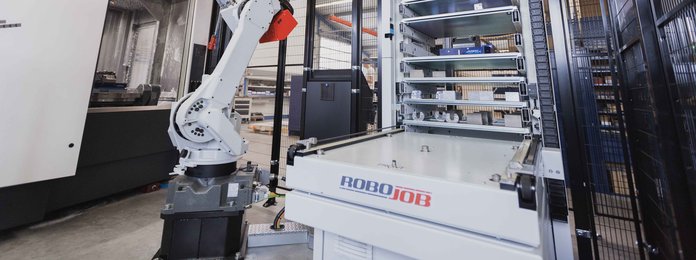
Why investing in CNC Automation is of all times, even in the face of (economic) uncertainty
Why invest in CNC Automation during economic uncertainty?
The order books are thinner than you’d like, and nobody knows exactly when that will change. You have no influence over the economy. But you do have control over how you come out of it. Because when demand returns – and in the manufacturing sector, it always does so faster than expected – you’ll want to be ready with a production setup that runs for longer hours, is less reliant on scarce operators, and can respond swiftly to small, fluctuating orders. A quiet period is no obstacle to this. It’s your best opportunity.
Why does the tight labour market make automation necessary?
Even when orders are slow, the clock keeps ticking. Experienced CNC operators are retiring, and young people rarely opt for a job that mainly involves loading and unloading workpieces. That problem existed even before the slowdown, and it will remain afterwards.
Automation is radically transforming that job. The robot takes over the repetitive work, whilst the operator focuses on other tasks such as programming, set-up and quality control. This makes the work more varied and more attractive to new talent. A quieter period is the ideal time to make that transition.
How do you respond to unpredictable demand?
The economy can recover faster than you might think, and you know how it goes in the manufacturing sector: demand springs up out of nowhere, and at a dizzying pace. With over 16 years’ experience, we know that this requires a level of flexibility from manufacturers that they usually lack.
Responding to unpredictable demand can cause you sleepless nights until you see the solution. Yet the solution is simple: if you don’t yet know the variables, look at what is certain.
The number of hours in a day is fixed. What you do have control over is how many of those hours your machine actually spends producing. In many workshops, a CNC machine runs for only a fraction of the time (30%): during the day shift, and only when an operator is available to load it. Breaks, sickness, leave and training reduce that utilisation rate even further.
With CNC Automation, that utilisation rate is virtually 100%.
And we’re all familiar with those pioneers in our sector whose annual accounts haven’t been in the red for years, who do manage to attract and retain young staff, and who see more orders coming in month after month. That’s because, some time ago – probably during a period similar to today – they took the time to review their processes. They came to the conclusion that they needed to invest in their machinery, digitalisation and automation, and they are now reaping the rewards. So this is how it can be done in the manufacturing industry too.
Why is the step to automation smaller now than at busy times?
After the ebb comes the flow, and it’s no different in the manufacturing industry. Anyone who was already struggling to keep up before the economic downturn will certainly benefit from a redesigned production process. The transition to automation always involves some downtime, but during a quiet period this drawback is limited.
What’s more, automation is the ideal way to catch up with – and even gain a lead over – your competitors, allowing you to reap the benefits quickly once the economy gets back on track. In the long term, you’ll then enjoy the cost savings that come with increased efficiency.
We know it takes a lot of courage and confidence to automate your production process, but in these unusual times, you’re being encouraged from all sides to take the plunge. With attractive terms and short lead times, the leap is smaller than ever, and you may recoup your investment even faster than you expect.
What are the benefits of automation for your workshop?
Find out in just a few minutes how many extra production hours you’ll gain and how quickly your investment will pay for itself.
Frequently asked questions about investing in CNC Automation during uncertain times
Is it a good idea to invest in CNC Automation during an economic downturn?
Yes. A quiet period is the best time to automate: the downtime needed for the transition hurts less, and when demand returns you are ready with a production setup that runs longer hours and depends less on scarce operators.
How much of the time does a CNC machine actually produce without automation?
In many workshops, a CNC machine runs for only around 30% of the time: during the day shift, and only when an operator is available to load it. With CNC Automation, that utilisation rate is virtually 100%.
How does CNC Automation help with the shortage of CNC operators?
The robot takes over the repetitive loading and unloading work, so operators can focus on programming, set-up and quality control. That makes the job more varied and more attractive to new talent.
How quickly does an investment in CNC Automation pay for itself?
That depends on your production. With the RoboJob ROI calculation, you can find out in a few minutes how many extra production hours you gain and how quickly your investment pays for itself.
Which RoboJob automation solution suits my CNC machine?
Answer a few questions in our Help me choose tool to find the right solution, or request a demo to see a RoboJob system in action.