High-mix low-volume automation: robots for small series
Small batches, many different parts and frequent changeovers? A RoboJob cell switches jobs in minutes, so even series of 5 to 10 parts can run unattended.
Can you automate small series?
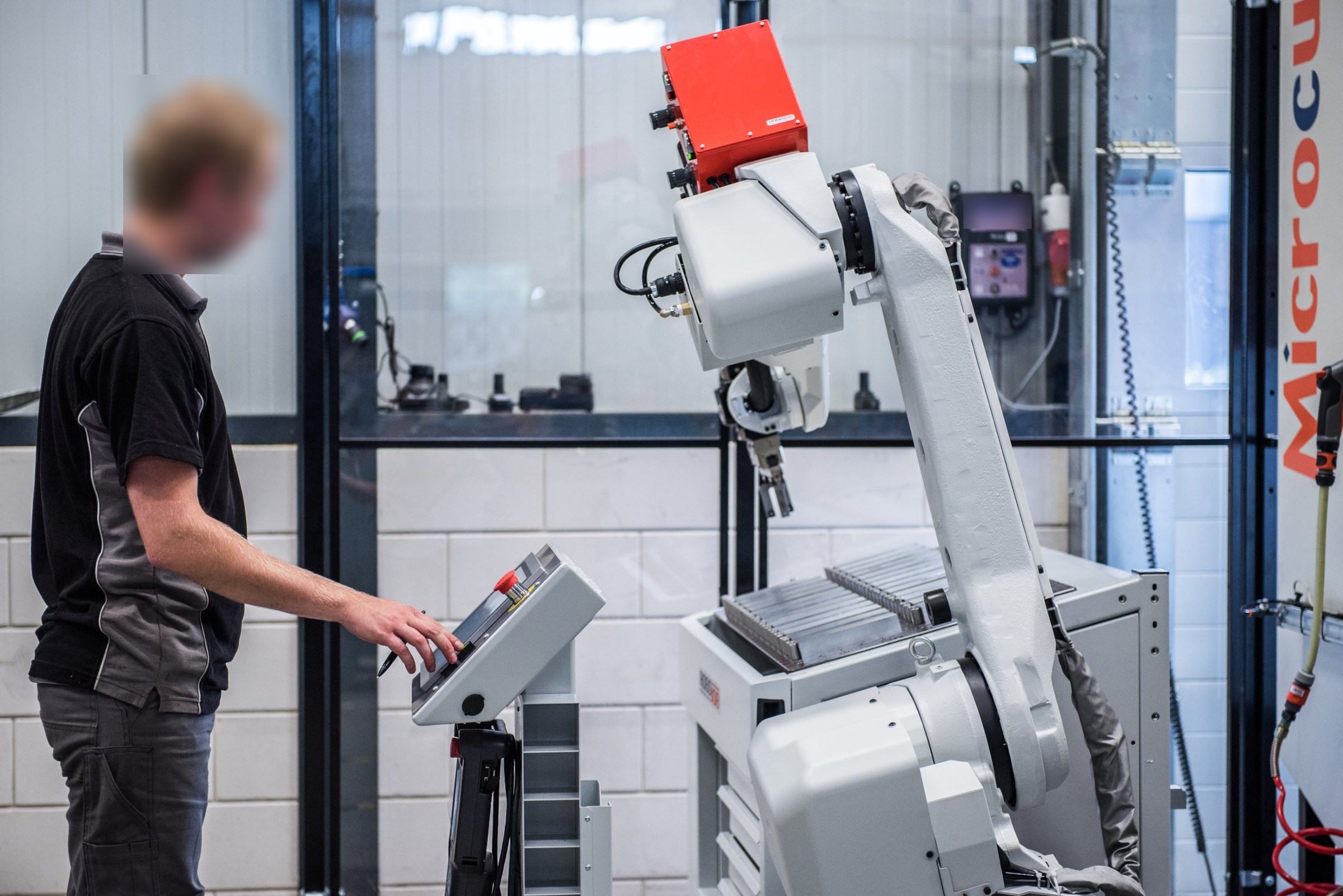
Yes. The old idea that automation only pays off for large batches comes from systems that took hours to set up. On a RoboJob cell, a new job is ready in about 5 minutes on a touchscreen, without robot programming, and saved jobs can be recalled for repeat orders.
That makes automation work for job shops and subcontractors with many different parts. SMB Feldner, a five-person machine builder, runs series of 5 to 10 parts unattended at night.
- Fast job set-up: about 5 minutes per new job, and repeat orders start from a saved job.
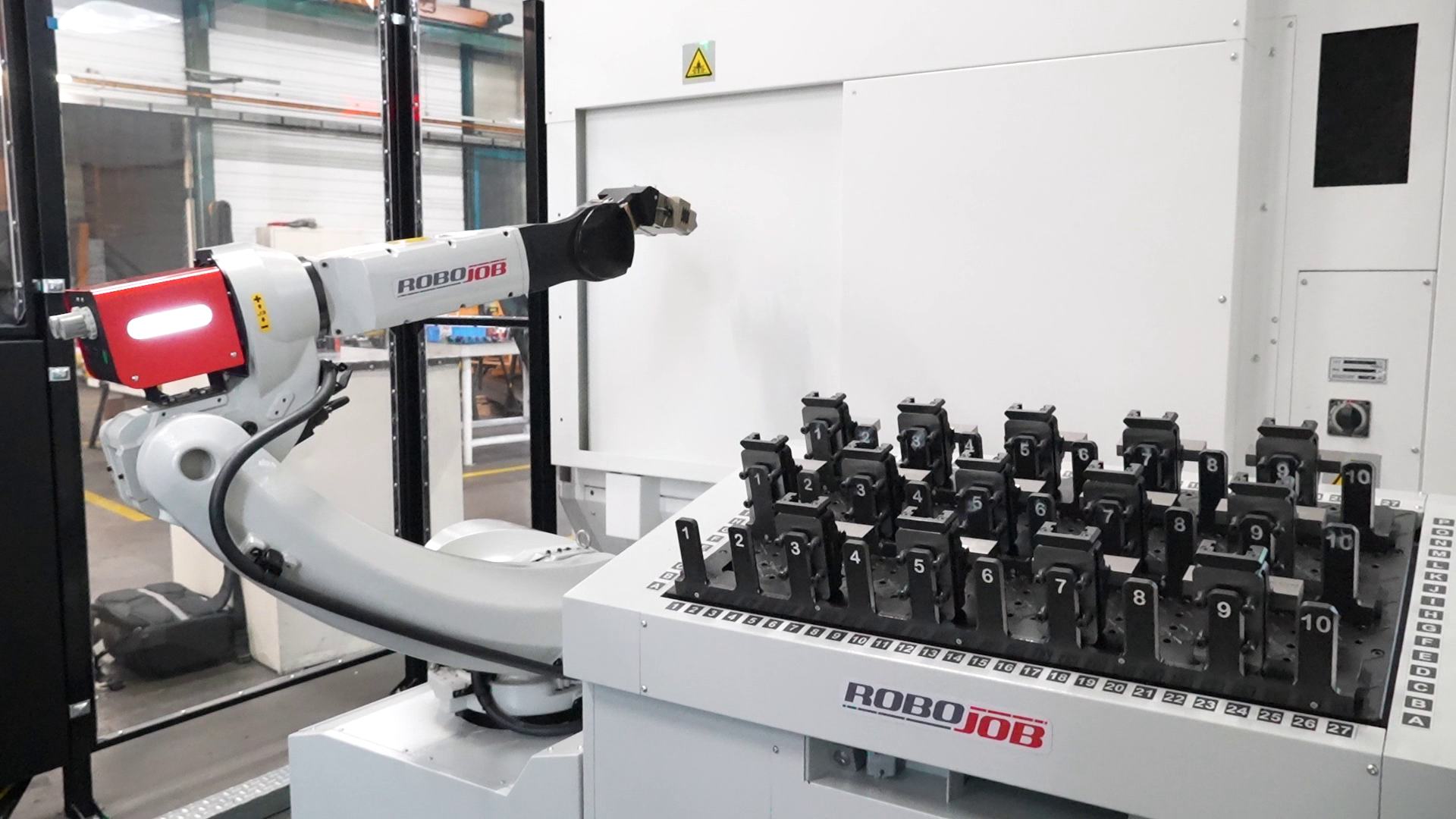
- Flexible part storage: grid plates, studs or adjustable trays, so different parts fit without special tooling.
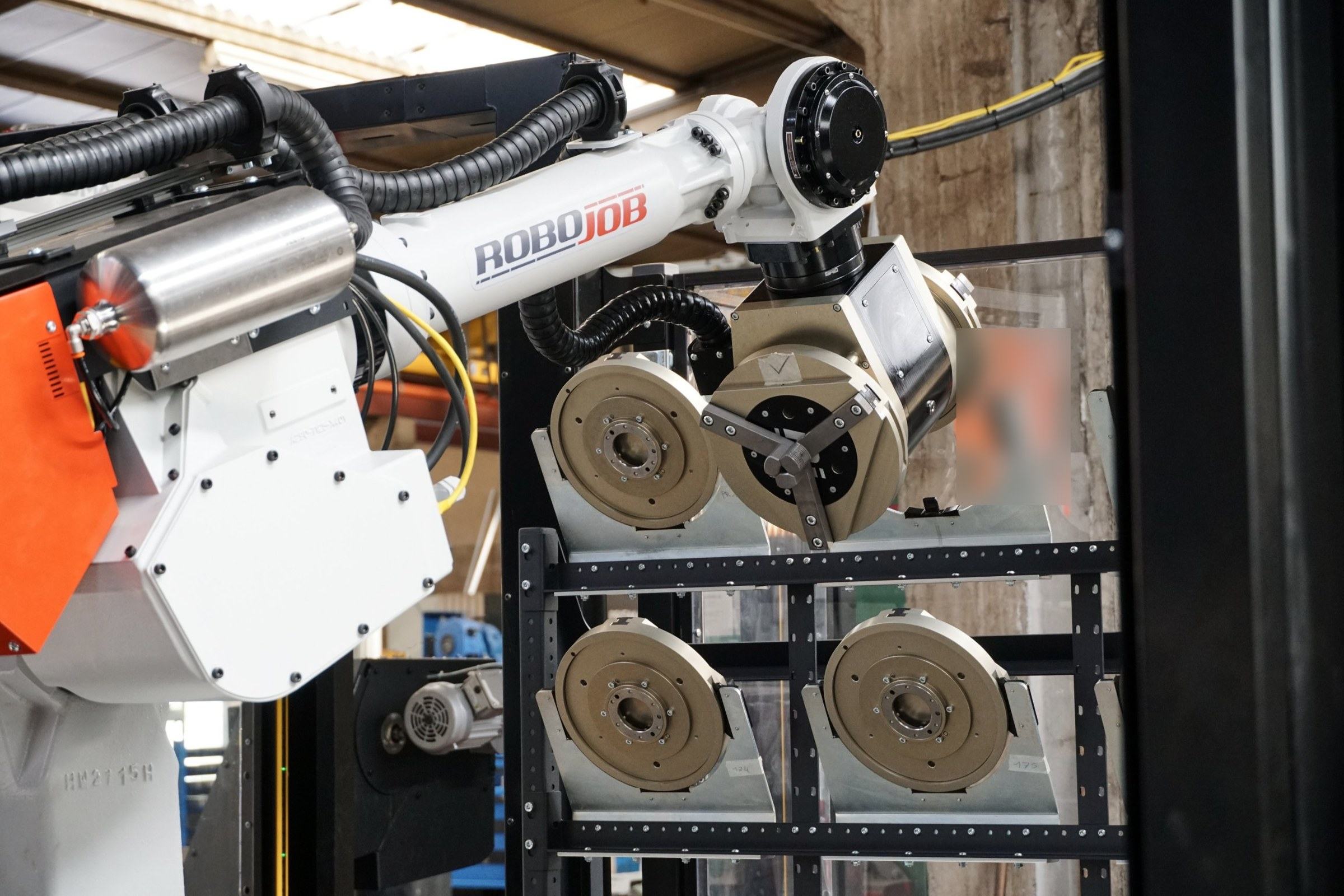
- Adaptable grippers: servo grippers adjust their clamping force; gripper exchange covers very different parts.
- Fixture exchange: for parts that need their own fixture, the robot changes the fixture too.
How a robot runs many small jobs
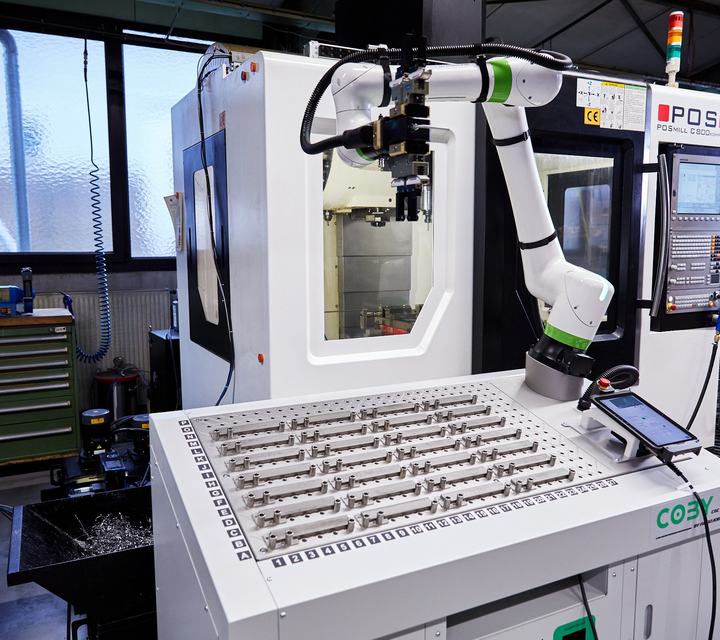
Blanks for several jobs share the table or the trays. No dedicated tooling is needed per part.
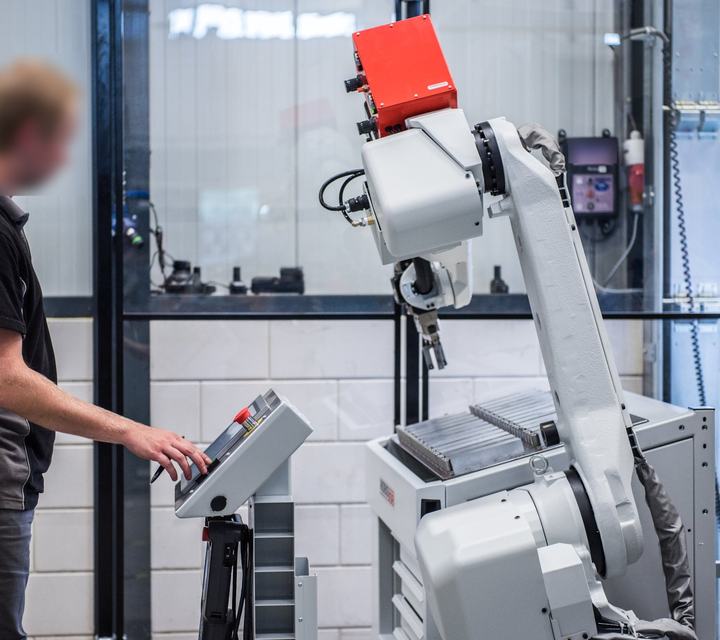
Per job, the operator enters the dimensions and selects gripper and program. Saved jobs are recalled for repeat orders.
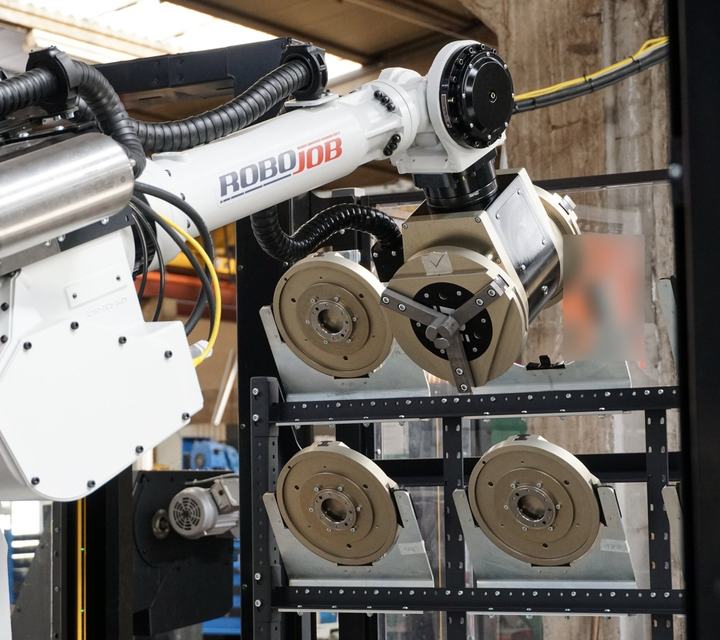
The robot adjusts or exchanges its gripper for each part, so different shapes and sizes follow each other.
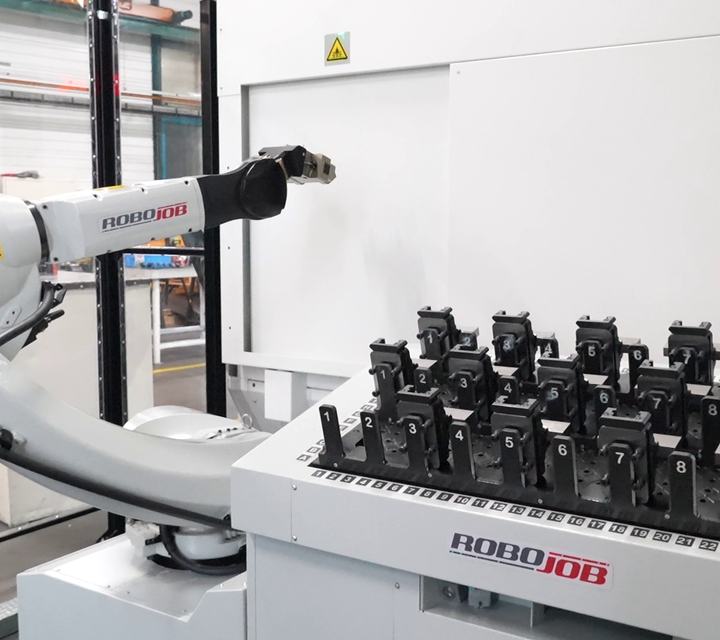
With fixture exchange, the robot also swaps fixtures between jobs. FMO runs up to five different parts in one cycle.
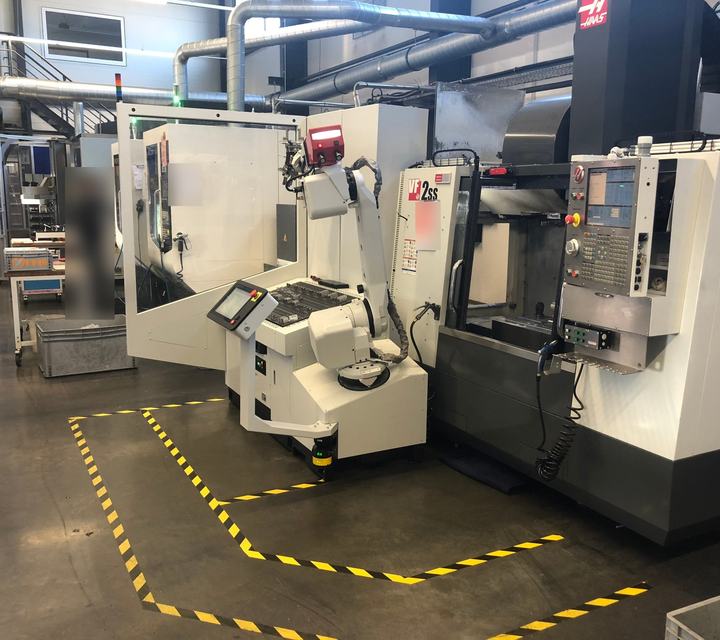
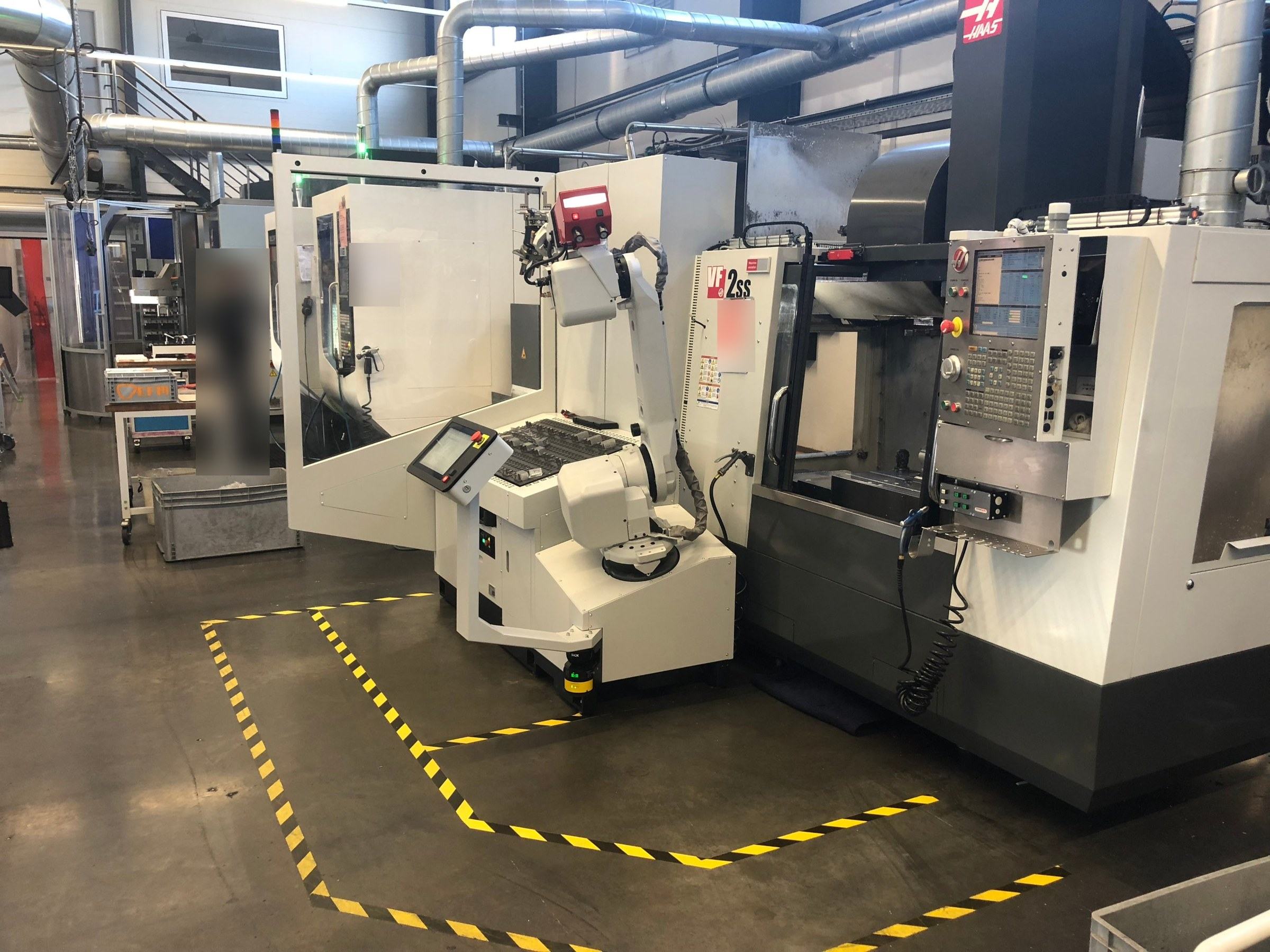
When one series is done, the next one starts. EFM switches quickly between products on its automated Haas machines.
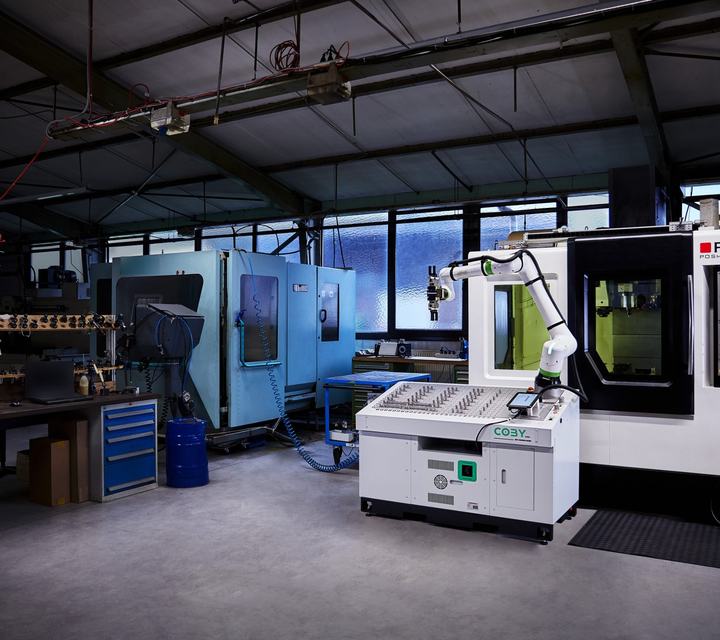
The machine runs the small series at night, so it is free during the day for prototypes and one-off parts.
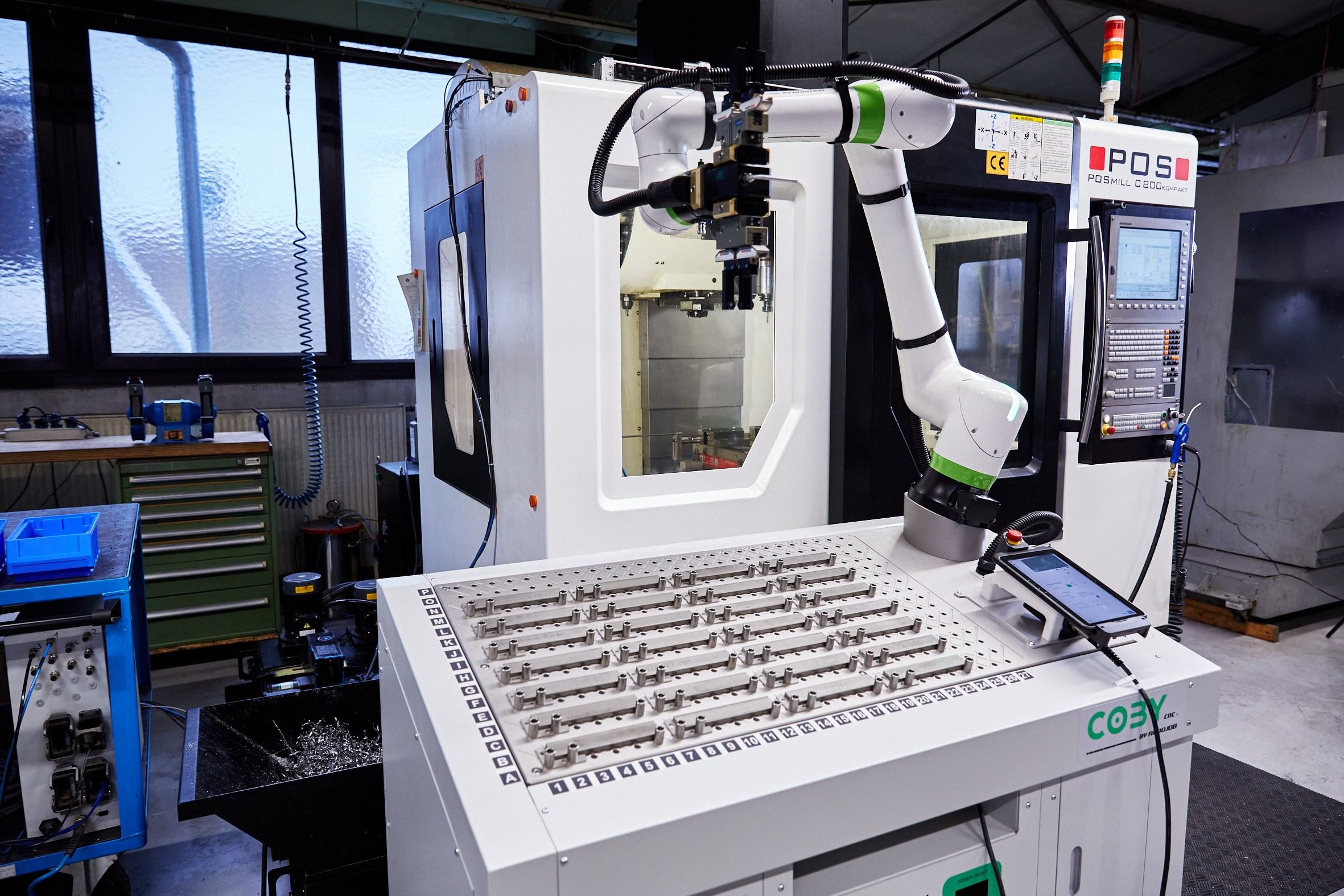
Which shops benefit most?
High-mix automation suits shops where batch sizes vary from a few parts to a few thousand, and where the same parts come back as repeat orders.
Customer orders differ every week. Fast changeovers and saved jobs let a robot handle that variety.
Spare parts and small series of own components often come in batches of 5 to 50. SMB Feldner and PTM Mechatronics automate exactly that kind of work.
When every part needs a different fixture, fixture pallets let the robot change over between jobs.
Which RoboJob system fits high-mix production?
- Tower: many jobs in storage at once, with gripper, jaw and tool exchange. The most flexible choice for high-mix work.
- Turn-Assist and Mill-Assist: compact cells with a configurable table and fast job changes.
- Mill-Assist with Fixture Exchange: for parts that each need their own fixture.
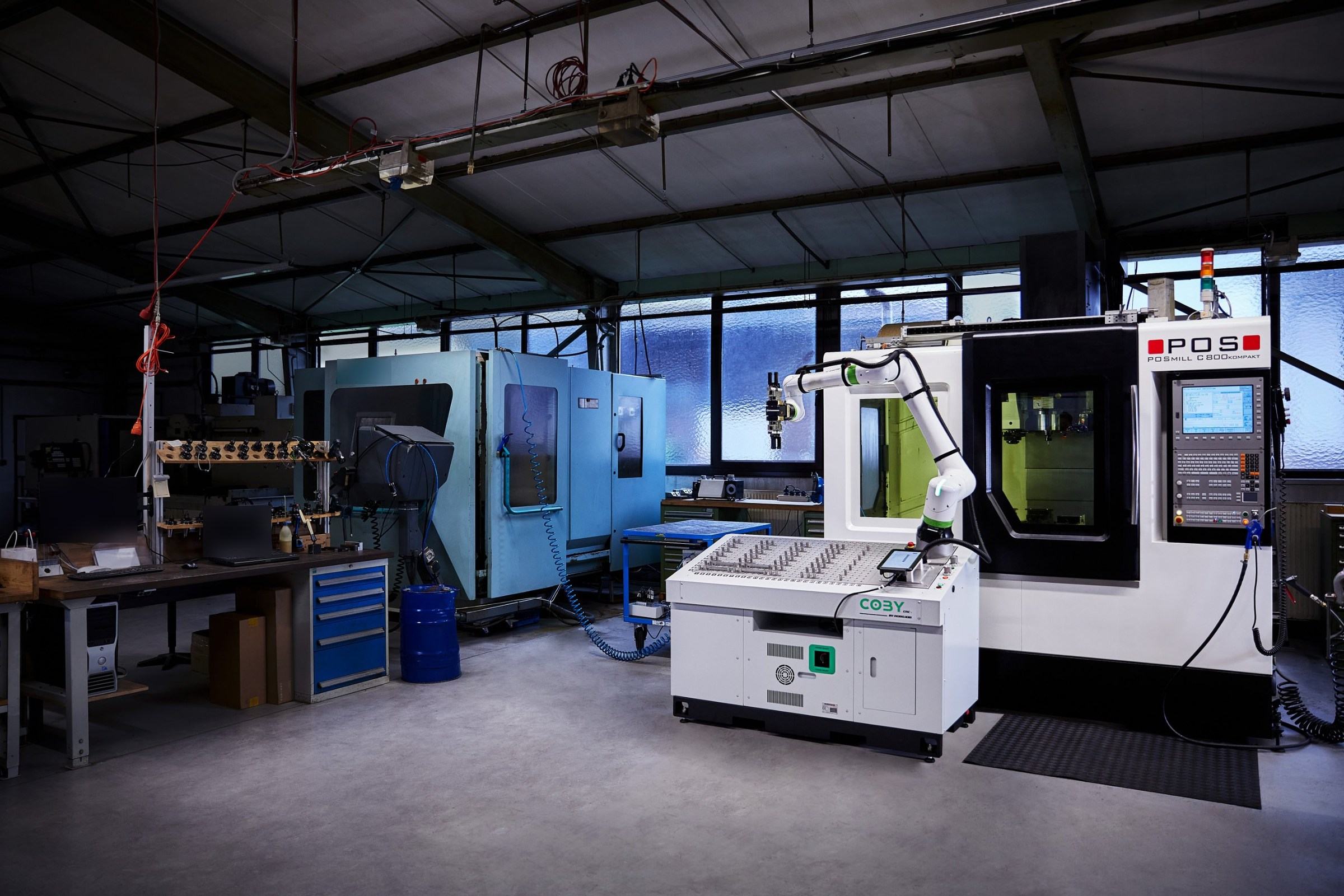
- Coby CNC: a cobot for small parts and small batches, easy to move to the machine where it is needed.
The same cell handles large runs. PTM Mechatronics runs batches from 100 to 8,000 parts on one automated machine.
Systems for high-mix production
-

Tower
Tower: die ultimative Automatisierung für Dreh- und Fräsmaschinen - wechselt Vorrichtungen, Spannbacken, Spannzangen und Werkstücke schneller, als Sie "Automatisierungsgenie" sagen können.
-

Turn-Assist
Ein intelligentes, flexibles System, das das Be- und Entladen von CNC-Drehmaschinen rationalisiert.
-

Mill-Assist
Eine kompakte, vielseitige Lösung, die das Beladen von CNC-Fräsmaschinen mit Geschwindigkeit und Präzision automatisiert.
-

Coby CNC
Der kompakte, auf Sicherheit bedachte Mitarbeiter, der Ihren ersten Schritt in die CNC-Automatisierung wie einen Spaziergang erscheinen lässt.
Orders they used to turn down
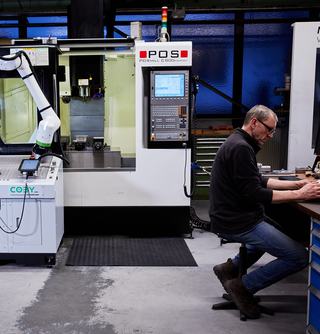
SMB Feldner now runs small series at night and accepts orders it had to refuse before.
Built for changeovers
Grid plates are optional, not required. Parts sit on the configurable table, so a new part does not need new tooling.
A servo gripper adjusts its clamping force and checks the part position. With a gripper exchange station, the robot switches to another gripper for very different parts.
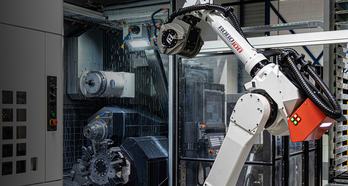
On a Tower, the robot can also exchange jaws, collets and tools, so jobs with different set-ups follow each other.
Does it pay off for small series?
The deciding factor is set-up time. If a robot job takes 5 minutes to set up and a series of 10 parts takes several hours of machining, the robot pays back on every series.
SMB Feldner, with series of 5 to 10 parts, was in the black from the first month.
What changes for small-series production
High-mix automation changes which orders you can accept.
Small series become profitable. SMB Feldner accepts series of 5 to 10 parts it used to turn down.
One-off parts during the day. Series run at night, so the machine is free for prototypes and single parts.
Different parts in one run. FMO machines up to five different parts in one cycle.
Quick changeovers. EFM switches quickly between products on its automated machines.
Repeat orders start instantly. Saved jobs are recalled with all their settings.
High-mix automation in practice
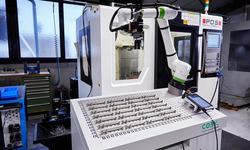
Special machine builder SMB Feldner tends a POSMill C 800 KOMPAKT with a Coby CNC. Small series run at night and at weekends, and the company now accepts orders it used to turn down.
With a Mill-Assist Essential and Fixture Exchange on a Mazak CV5-500, FMO loads workpieces and fixtures automatically and machines several different parts in one unattended run.
EFM automated three Haas VF milling machines with Mill-Assist Essential cells. Changeovers between products are quick, and the automated machines run 50% more spindle hours.
More customer stories
Discover how other job shops automated their high-mix production.
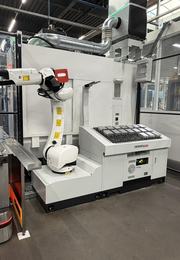
More customer stories
Discover how other job shops automated their high-mix production.
High-mix low-volume automation: frequently asked questions
Is automation worth it for small batches?
Yes, if job set-up is fast. On RoboJob systems a new job takes about 5 minutes, and saved jobs are recalled for repeat orders. SMB Feldner automates series of 5 to 10 parts.
Do I need special tooling for every part?
No. The configurable table holds different parts without dedicated tooling; grid plates are optional. Grippers adapt to the part or are exchanged automatically.
Can a robot run different parts in one night?
Yes. A Tower holds many jobs at once, and with fixture exchange the robot also changes fixtures between parts.
What is the smallest batch size worth automating?
It depends on cycle time. When the machining time of a batch is much longer than the 5 minutes of set-up, automating it pays off, even for a handful of parts.
Which RoboJob system is best for high-mix work?
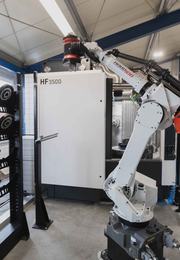
The Tower is the most flexible, with large storage and gripper, jaw and tool exchange. Turn-Assist and Mill-Assist are compact alternatives with fast job changes.
Ready to automate your small series?
Tell us about your typical batch sizes and parts. We will show you which jobs a robot can take over.
Let's meet
Want to know which of your small series a robot can take over?
Get in touch and explore the opportunities for your business.


Jan Van De Wouwer
Sales Manager

Austin Davis
Area Sales Manager
