CNC machine tending: let a robot load and unload your CNC machines
A robot loads raw parts into your lathe or milling machine, unloads the finished parts and starts the next cycle, so your machines keep running at night and over the weekend.
What is CNC machine tending?
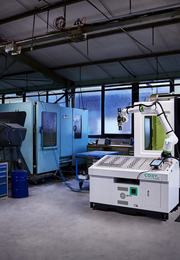
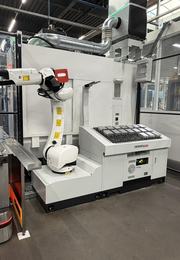
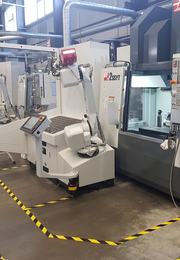
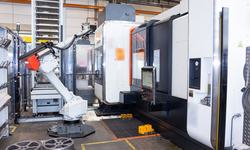
CNC machine tending is the automated loading and unloading of a CNC machine by a robot. The robot takes over the repetitive part of the job: picking a raw workpiece, placing it in the chuck or vice, starting the program and removing the finished part. Machining itself stays exactly as it is. RoboJob has built CNC machine tending systems since 2007, with more than 2,000 robots installed in over 30 countries.
In most machine shops, a CNC machine only cuts while someone stands next to it. When the operator is on a break, setting up another machine or has gone home, the spindle stops. A machine tending robot closes that gap. It keeps the machine running during breaks, between shifts and through the night.
Machine tending is not the same as robotic machining, where the robot itself holds the cutting tool. With machine tending your CNC machine does all the cutting, at full precision. The robot simply makes sure it never waits for its next part.
- Shortage of skilled CNC operators: one operator can supervise several machines instead of feeding one.
- More spindle hours from the machines you already own: unattended evening, night and weekend shifts add capacity without buying another machine.
- Lower cost per part: higher machine utilisation spreads machine and labour costs over more parts.
- Consistent quality: the robot loads every part the same way, cycle after cycle.
- Better jobs: operators move from repetitive loading to programming, set-up and quality control.
How robotic machine tending works
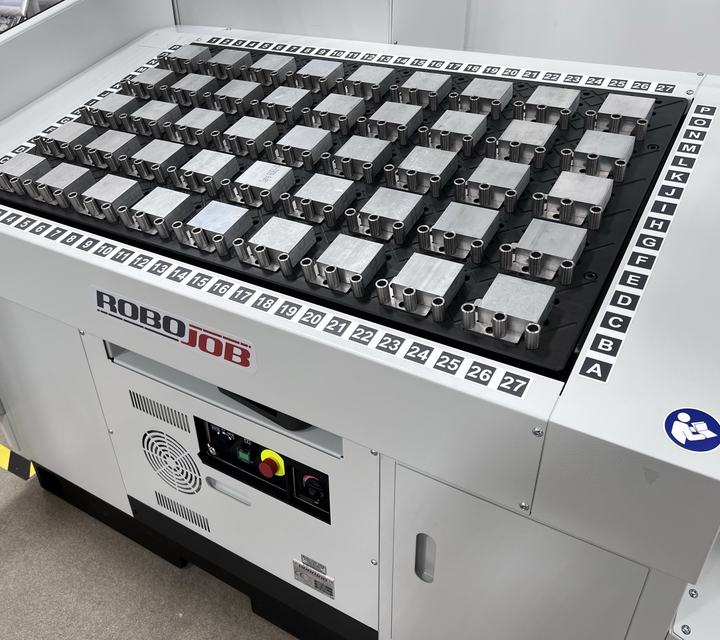
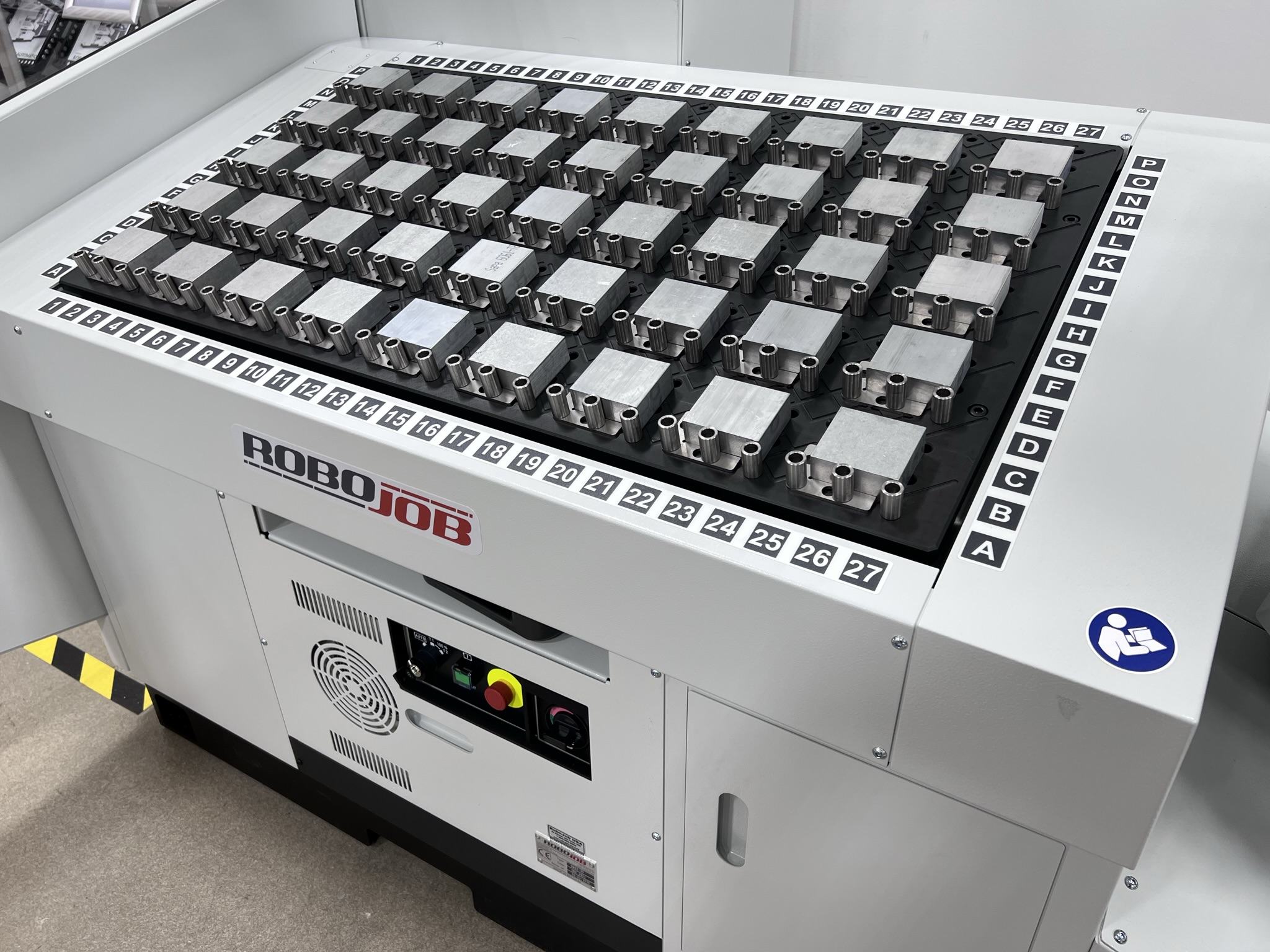
The operator places raw workpieces on the table of the system, on grid plates or studs, in the trays of a Tower or Wall, or on a pallet. This can be done while the machine is running.
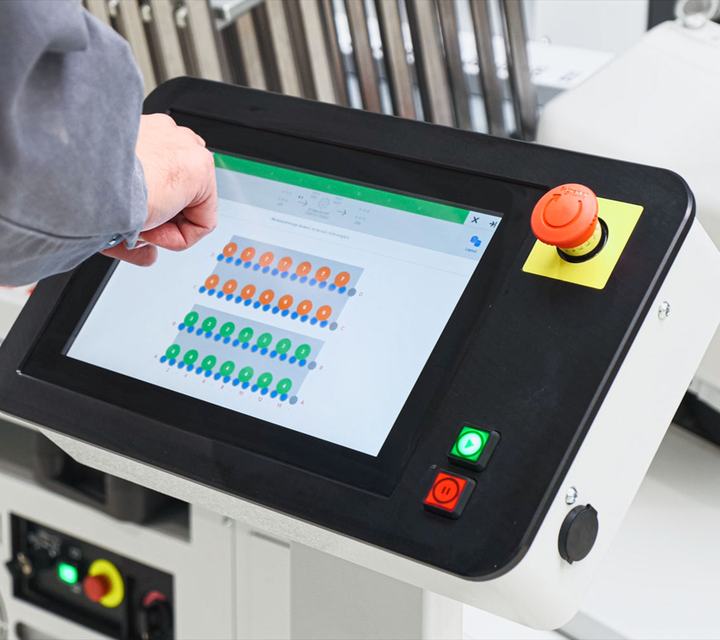
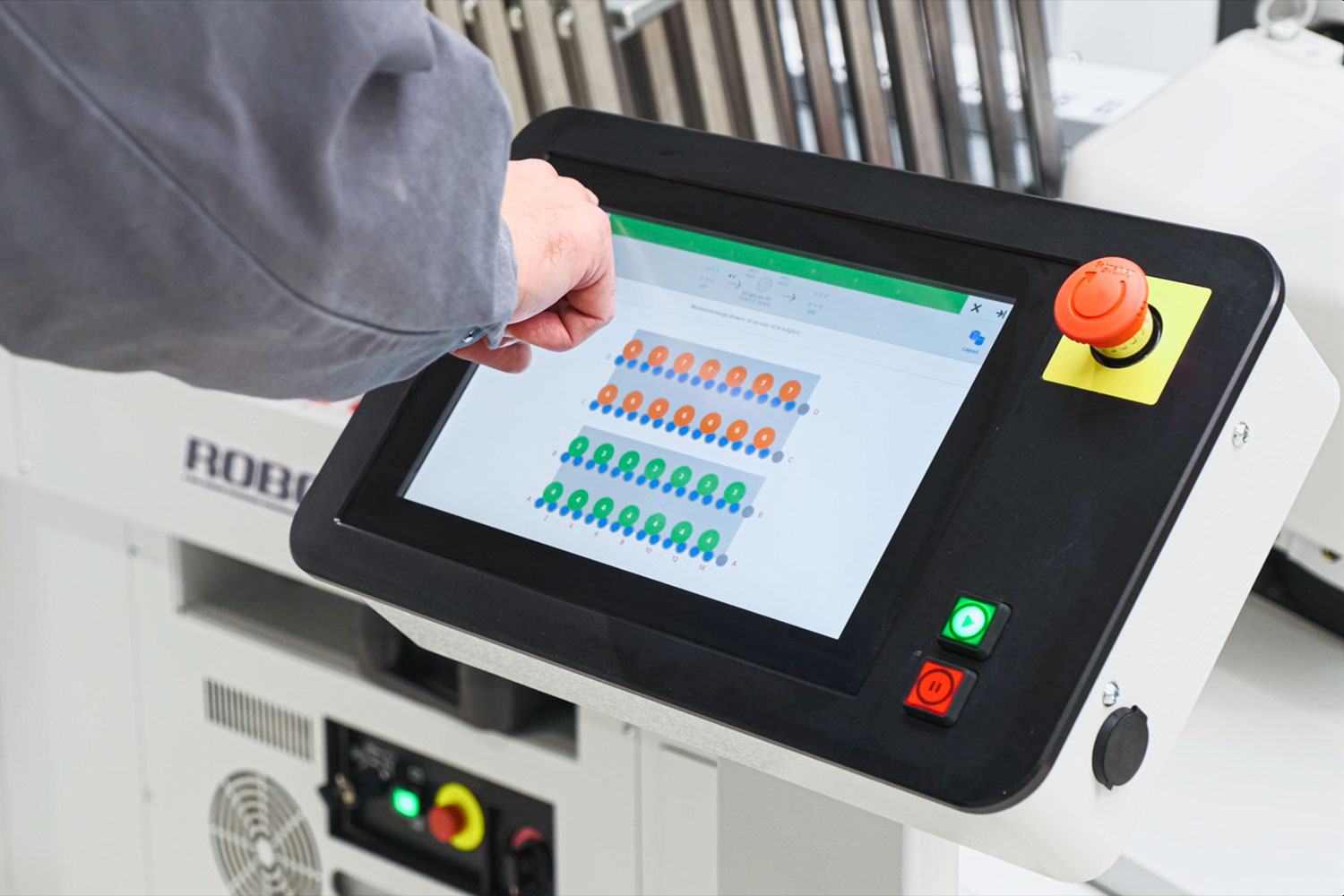
On the touchscreen, the operator enters the workpiece dimensions and selects the gripper and CNC program. 3D visualisations show the workpiece, gripper and table. No robot programming skills are needed, and saved jobs can be recalled for repeat orders.
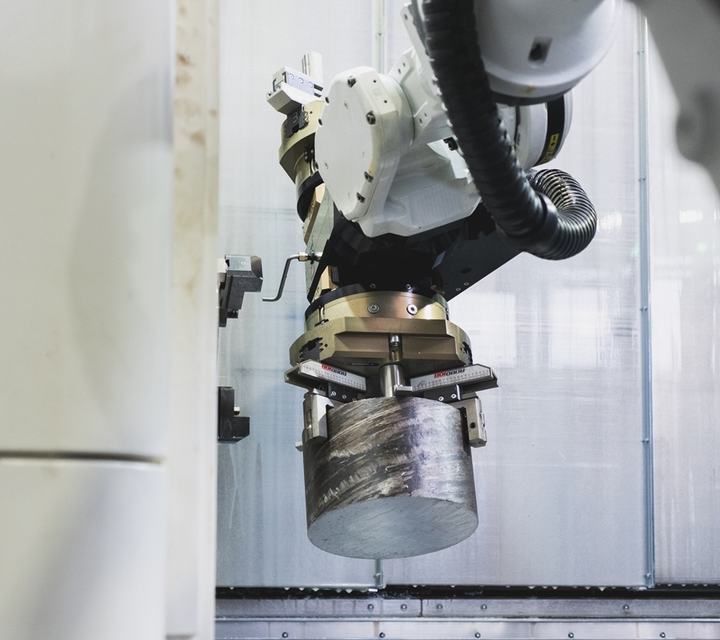
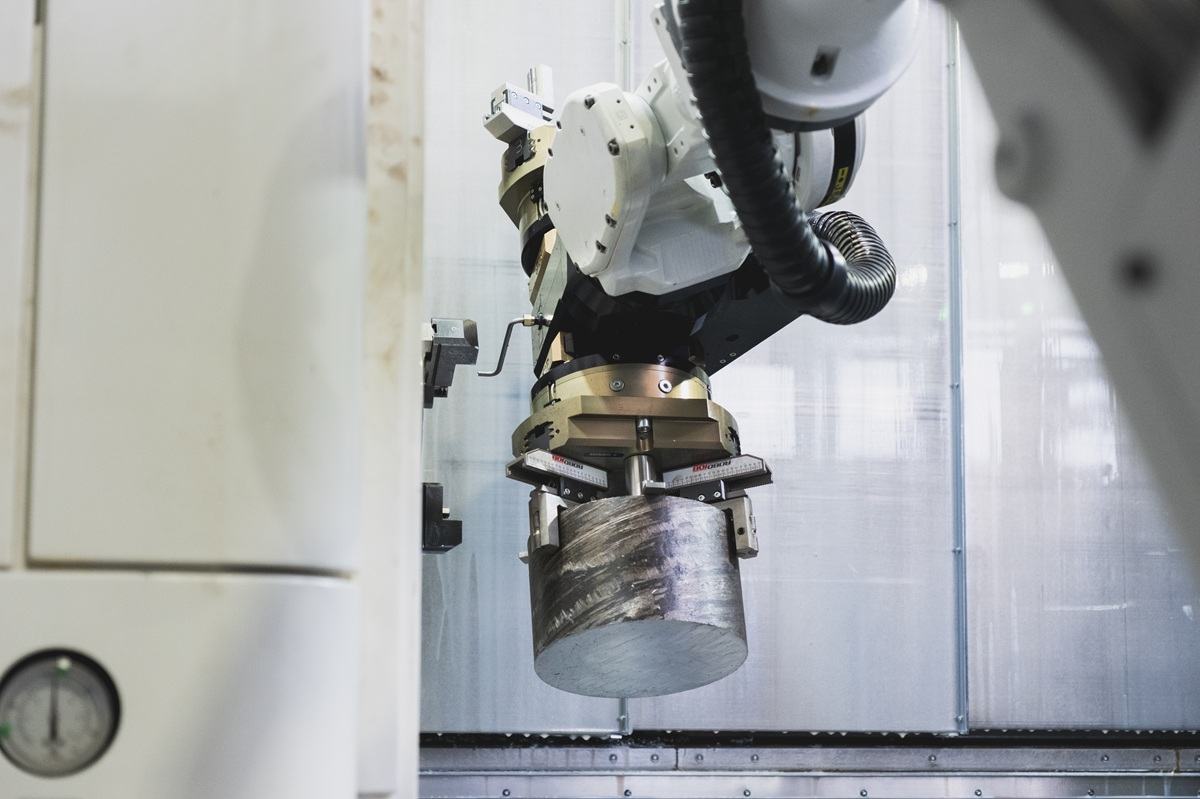
When the machine finishes a cycle, the machine door opens, the robot picks the finished part, places a raw part in the chuck, vice or fixture, and gives the start signal.
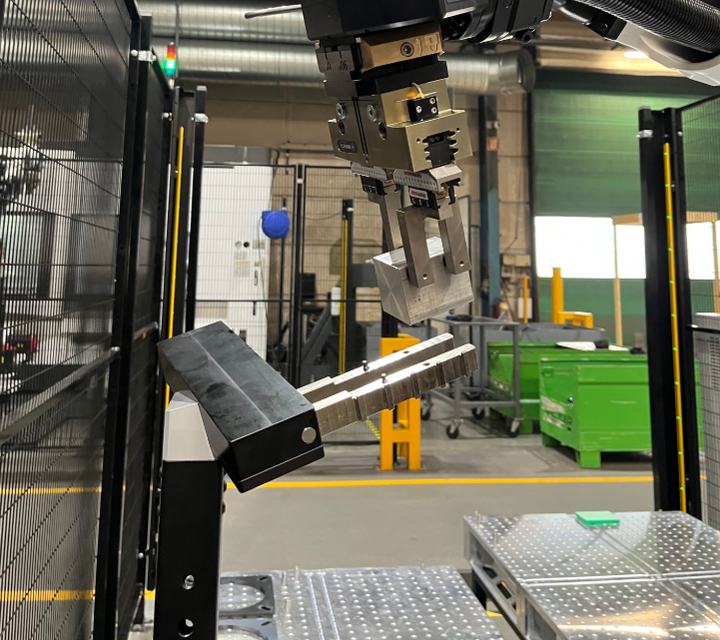
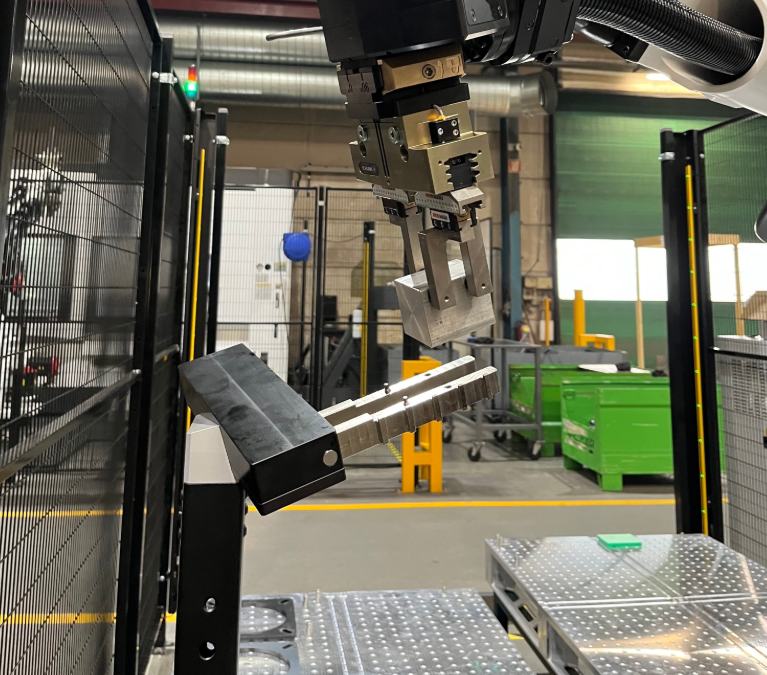
A flip-over unit turns the part for machining the second side. Other modules exchange grippers, jaws, fixtures, collets or tools, so different jobs can run one after another.
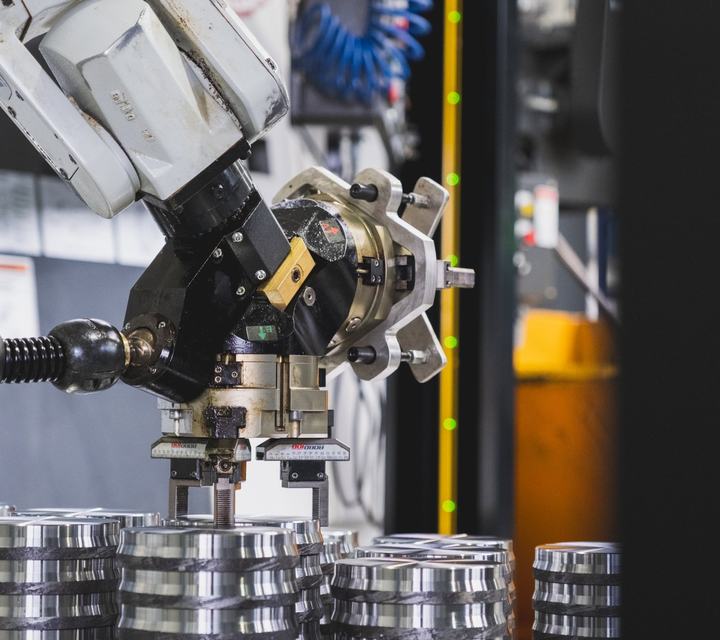
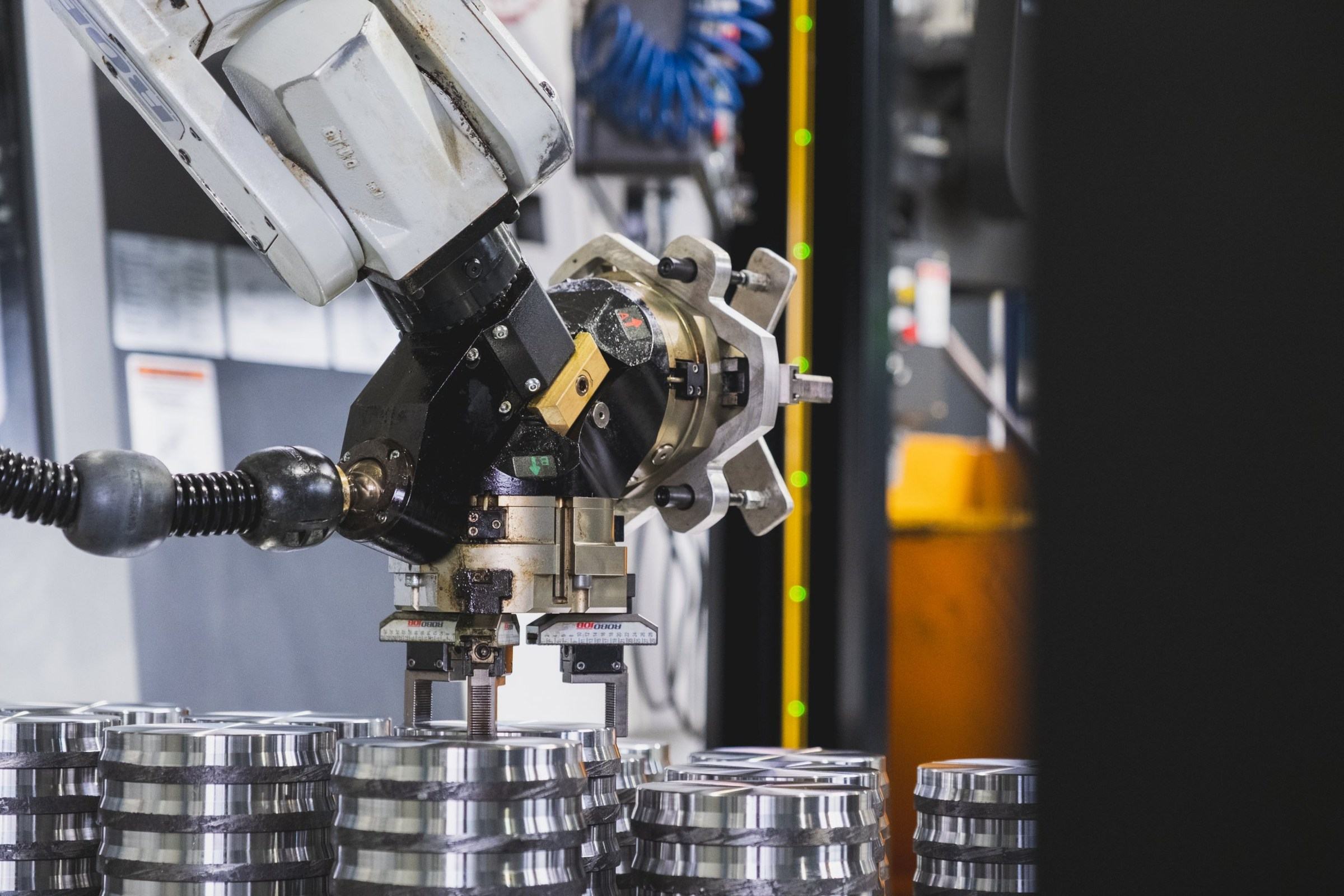
The robot places the finished part back on the table, in a tray, or stacks it on an unload pallet, ready for the next process.
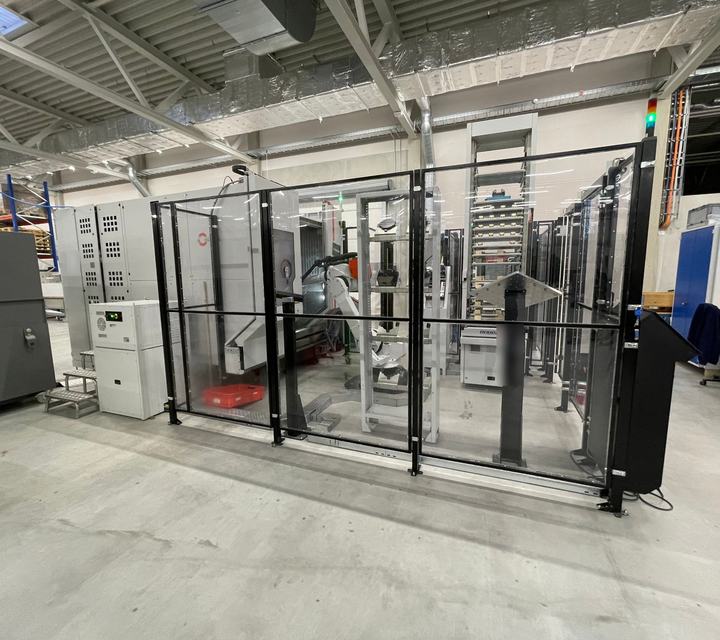
The operator refills raw parts and removes finished parts whenever it suits the schedule, or lets the cell run through the night and weekend.
Which CNC machines can a robot tend?
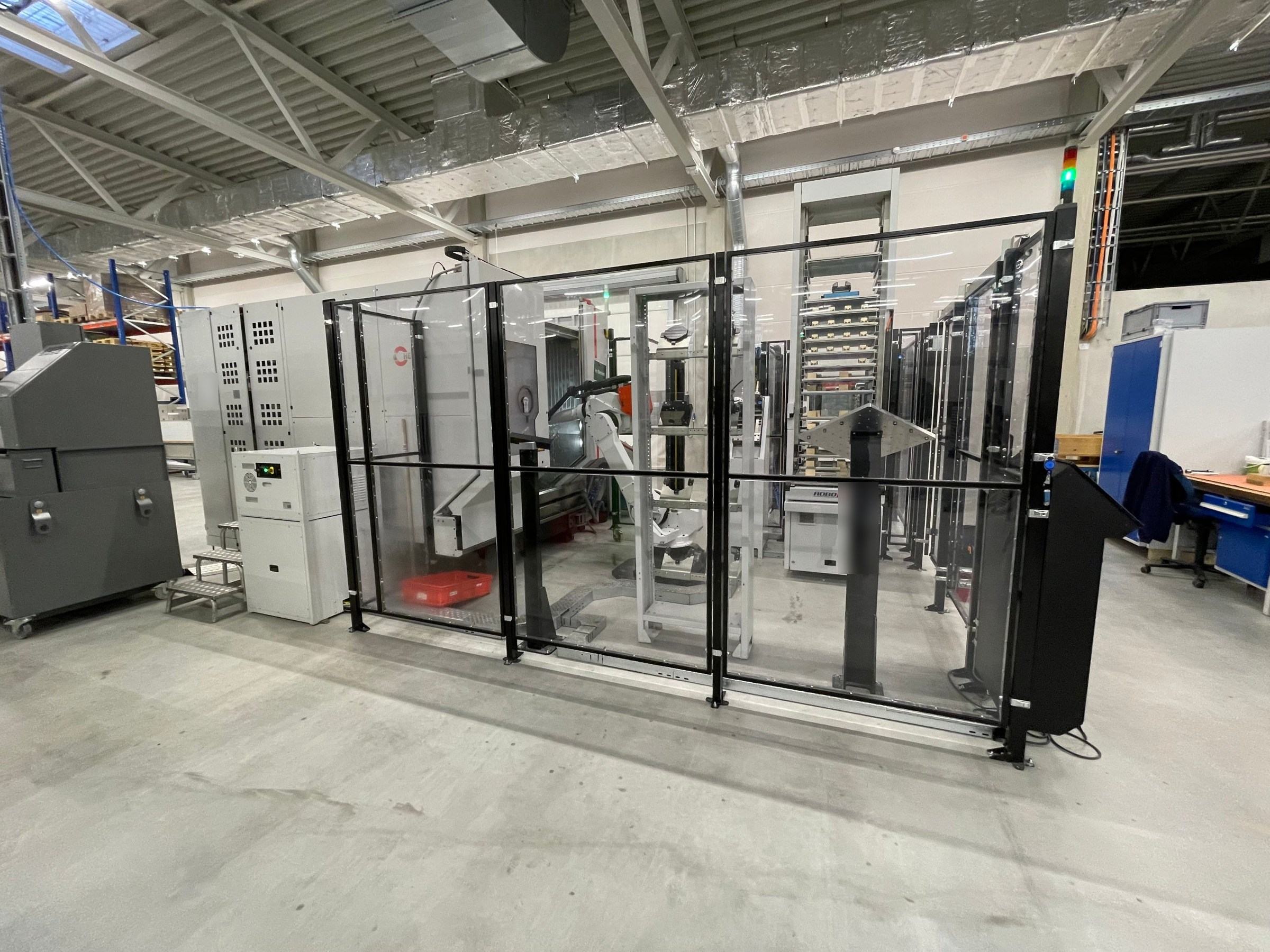
A RoboJob robot can tend almost any CNC lathe or milling machine, new or existing, from every major brand. To be automated, a machine needs three things: a robot interface, an automatic door and automatically actuated workholding (a vice, chuck or collet). You choose who provides them: your machine supplier, or RoboJob. RoboJob can take care of the complete retrofit for you.
The robot loads blanks into the chuck or collet and unloads turned parts, from 2-axis lathes to turning centres with a Y-axis and mill-turn machines. Typical solutions: Turn-Assist, Tower, Pallet-Load and Coby CNC.
The robot loads parts into the vice or fixture of 3-axis, 5-axis and horizontal machining centres, or exchanges complete fixture pallets. Typical solutions: Mill-Assist, Tower, Wall and Coby CNC.
RoboJob automates machines from Mazak, DMG Mori, Haas, Okuma, Fanuc, DN Solutions, Hurco, Brother, Hedelius, Nakamura-Tome, Emco, Hwacheon, Kitamura and many more. One Tower or Wall can even tend machines of different brands.
Which machine tending system fits your shop?
The right system depends on your workpiece weight, batch sizes and how long you want the machine to run unattended. RoboJob offers six machine tending systems, from a cobot to a cell that feeds several machines around the clock.
- Coby CNC: cobot for small, light parts and small batches, on lathes, milling and turn-mill machines. 10 kg robot payload, workpieces up to 4 kg. No fencing or scanners needed, and it moves between machines.
- Turn-Assist: for CNC lathes, from small series to larger batches. 12, 25, 35 or 70 kg robot, workpieces from 6 to 42 kg. Patented stacking table; models Essential Mini, Essential, 200 and 270.
- Mill-Assist: for CNC milling machines with frequent job changes. 12, 25, 35 or 70 kg robot, workpieces from 6 to 42 kg. Two exchangeable grippers, installed in 4 to 5 days.
- Pallet-Load: for heavy or large parts in larger batches, on lathes or milling machines. 35 or 165 kg robot, workpieces up to 24 or 113 kg. Raw parts on a positioning pallet, finished parts back on the pallet or on a wooden pallet.
- Tower: for high-mix production and long unattended runs, on up to two turning or milling machines. 35 or 165 kg robot, workpieces up to 24 or 113 kg. Up to 14 m² of storage in adjustable trays.
- Wall: for several machines, each with its own robot, from one central storage. 35 or 165 kg robot, workpieces up to 24 or 113 kg. Modular: starts with four modules and grows.
The robot payload is a gross figure that includes the gripper. The maximum workpiece weight is what remains after subtracting the gripper.
- 10 kg cobot: 4 kg workpiece
- 12 kg robot: 6 kg workpiece
- 25 kg robot: 14 kg workpiece
- 35 kg robot: 24 kg workpiece
- 70 kg robot: 42 kg workpiece
- 165 kg robot: 113 kg workpiece
RoboJob chooses the robot for your heaviest part. Heavier robots are possible on request.
Choose a cobot when parts are light (up to 4 kg on Coby CNC), batches are small and you want to move the robot between machines without safety fencing. Choose an industrial robot cell such as Turn-Assist, Mill-Assist or Tower when parts are heavier, cycle times are short or you want to run unattended for many hours. Many shops start with one and add the other later.
Explore our machine tending systems
-

Coby CNC
Der kompakte, auf Sicherheit bedachte Mitarbeiter, der Ihren ersten Schritt in die CNC-Automatisierung wie einen Spaziergang erscheinen lässt.
-

Turn-Assist
Ein intelligentes, flexibles System, das das Be- und Entladen von CNC-Drehmaschinen rationalisiert.
-

Mill-Assist
Eine kompakte, vielseitige Lösung, die das Beladen von CNC-Fräsmaschinen mit Geschwindigkeit und Präzision automatisiert.
-

Pallet-Load
Eine zuverlässige Automatisierungslösung für das effiziente Be- und Entladen von CNC-Maschinen von und auf eine Palette.
-

Tower
Tower: die ultimative Automatisierung für Dreh- und Fräsmaschinen - wechselt Vorrichtungen, Spannbacken, Spannzangen und Werkstücke schneller, als Sie "Automatisierungsgenie" sagen können.
-

Wall
Ein revolutionäres modulares Automatisierungssystem, das die Beladung von CNC-Maschinen bei maximaler Raumeffizienz vereinfacht.
Loading from pallets and unloading onto Euro pallets
The robot picks raw parts from a positioning pallet and stacks finished parts on a wooden Euro pallet. Less manual handling, longer unattended runs.
Pallet-Load and Pallet-Unload in detail
The robot picks heavy or large raw workpieces, stacked or loose, from a positioning pallet sized to a Euro pallet (1,200 x 800 mm) and loads them into the CNC machine. Available on Mill-Assist, Turn-Assist, Tower and Wall.
The robot stacks finished parts directly on a standard wooden Euro pallet, in a fixed pattern or in a layout the software calculates. This doubles the capacity of the system. Available on Mill-Assist, Turn-Assist and Pallet-Load.
A complete machine tending system built around this concept, for lathes or milling machines and workpieces up to 113 kg.
What does machine tending automation deliver?
The return on a machine tending robot comes from extra spindle hours on machines you already own. Every hour the machine cuts unattended is capacity you did not have to buy or staff.
A simple example: a machine that runs one 8-hour shift, 5 days a week, cuts about 40 hours a week. If a robot keeps it running for 8 more hours each evening and night, that becomes 80 hours: twice the output from the same machine. The real figure depends on your cycle times, batch sizes and how much raw material the system can hold.
What changes in your shop
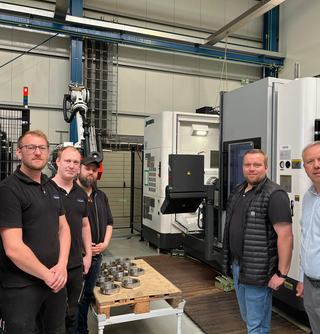
Automating machine tending changes more than the number of spindle hours. It changes how your team works and how you plan production.
More capacity from the same machines. The machine keeps cutting during breaks, in the evening, at night and at weekends. Strautmann Hydraulik raised capacity utilisation in its automated area from 68% to 85%.
Operators do more valuable work. One operator supervises several machines and spends time on programming, set-up and quality control instead of loading parts.
Small series become profitable. A new job is set up in about 5 minutes, and saved jobs can be recalled for repeat orders. SMB Feldner now runs series of 5 to 10 parts unattended and accepts orders it used to turn down.
Planning becomes predictable. Prepare jobs during the day and let them run at night. The robot loads every part the same way, so quality stays consistent from the first part to the last.
You know your payback upfront. The RoboJob ROI calculation shows the payback time for your own machines, wages and shifts.
Machine tending in practice
Hydraulic cylinder maker Strautmann Hydraulik has automated five CNC machines with RoboJob since 2016: three Okuma machines, one DMG Mori and one Biglia, with Turn-Assist and Pallet-Load systems. Capacity utilisation in the automated area rose from 68% to 85%, and the machines now run unmanned until the early hours.
Five-person special machine builder SMB Feldner tends its POSMill C 800 KOMPAKT with a Coby CNC since 2022. The cobot runs small series of 5 to 10 parts at night and at weekends, adding more than six spindle hours a day. The company now accepts orders it used to turn down, and the investment was in the black from the first month.
Precision manufacturer Boers & Co tends seven Mazak machines with three Mill-Assist Essential cells, two Pallet-Load systems and two Turn-Assist systems, from CV5-500 machining centres to Integrex multitasking machines. The result: higher spindle efficiency and more unattended production at night.
More customer stories
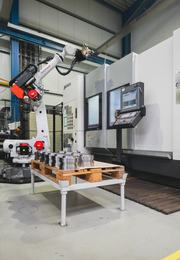
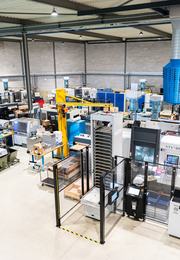
More than 2,000 robots in over 30 countries keep CNC machines running. Discover how other machine shops automated their machine tending.
More customer stories
More than 2,000 robots in over 30 countries keep CNC machines running. Discover how other machine shops automated their machine tending.
CNC machine tending: frequently asked questions
What is CNC machine tending?
CNC machine tending is the automated loading and unloading of a CNC lathe or milling machine by a robot. The robot places raw workpieces in the machine, removes finished parts and starts the next cycle, so the machine keeps running without an operator, including at night and over the weekend.
Can I automate an existing CNC machine?
Yes. RoboJob automates new and existing CNC machines from all major brands, including Mazak, DMG Mori, Haas, Okuma, Fanuc and DN Solutions. The machine needs a robot interface, an automatic door and automatically actuated workholding (vice, chuck or collet). Your machine supplier can add these, or RoboJob can handle the complete retrofit for you.
Is machine tending worth it for small batches?
Yes, if set-up is fast. On RoboJob systems a new job is set up in about 5 minutes on a touchscreen, without robot programming, and jobs can be saved for repeat orders. For very small, light parts, the Coby CNC cobot is a low-threshold option.
How long can a CNC machine run unattended with a robot?
That depends on cycle time and how many raw parts the system holds. Compact cells cover breaks and evening hours. Systems with large storage, such as Tower, Wall or Pallet-Load with Pallet-Unload, are designed to run through the night, over weekends or for several days in a row.
What is the difference between a cobot and an industrial robot for machine tending?
A cobot works next to people without safety fencing and is easy to move between machines, but handles lighter parts: Coby CNC handles workpieces up to 4 kg. An industrial robot cell handles heavier parts and longer unattended runs: up to 42 kg on Turn-Assist and Mill-Assist, and up to 113 kg on the standard Tower, Wall and Pallet-Load systems. Larger robots are possible for heavier parts.
Do my operators need robot programming skills?
No. Operators enter the workpiece dimensions and select the gripper and CNC program on a touchscreen with 3D visualisations. The RoboJob software calculates the robot movements.
How long does installation take?
A Coby CNC, Turn-Assist, Mill-Assist or Pallet-Load is installed in 4 to 5 days. Coby CNC can be installed by the customer, but RoboJob installs almost every Coby. A Tower or Wall takes at least 2 weeks, depending on the machines, the number of machines, the processes and the modules. A Wall serving several machines can take 4 weeks or more.
Can one automation system tend several CNC machines?
Yes. A Tower can be set up for two machines, and a Wall supplies several machines, each with its own robot, from one central storage. The machines can be of different brands. Coby CNC can be moved from one machine to another.
Ready to automate your CNC machines?
Tell us which machines and parts you want to automate. We will propose the machine tending system that fits, with a clear offer.
Let's meet
Want to know which machine tending system fits your CNC machines?
Get in touch and explore the opportunities for your business.


Jan Van De Wouwer
Sales Manager

Austin Davis
Area Sales Manager
